How to Combine Inbound & Outbound Marketing: Step-by-Step Guide
Published: 21 Sep 2026
I know, guys, you’ve already cleared your concepts of what is inbound marketing and what is outbound marketing, but now you’re probably wondering how to actually combine both into one powerful approach. Basically, you’re thinking about building a hybrid marketing strategy that uses inbound and outbound together, and that’s exactly where most people get stuck. So, no need to worry.
In this guide, I’ll show you how to combine inbound and outbound marketing in a practical way, why it matters for better results, which tools you should use, and much more.
So, let’s get started.
How to Combine Inbound and Outbound Marketing?
So guys, here are the steps involved in combining inbound and outbound marketing strategy:
- Audience Research & Persona Building
- Goal Setting & Funnel Planning
- Content Creation (Inbound Assets)
- SEO & Organic Traffic Setup
- Lead Magnet Development
- Landing Page Optimization
- Paid Advertising Strategy
- Cold Outreach (Email/DM/Calls)
- Retargeting Campaigns
- Email Marketing & Lead Nurturing
- CRM & Marketing Automation Integration
- Sales & Marketing Alignment
- Multi-Channel Campaign Execution
- Data Tracking & Analytics Setup
- A/B Testing & Optimization
- Scaling & Continuous Improvement
Now let me guide you through all of these in detail.
Step 1: Audience Research & Persona Building
Before you combine inbound and outbound marketing, you need to clearly understand who you are targeting. This step is all about identifying your ideal customer, their needs, problems, and behavior.
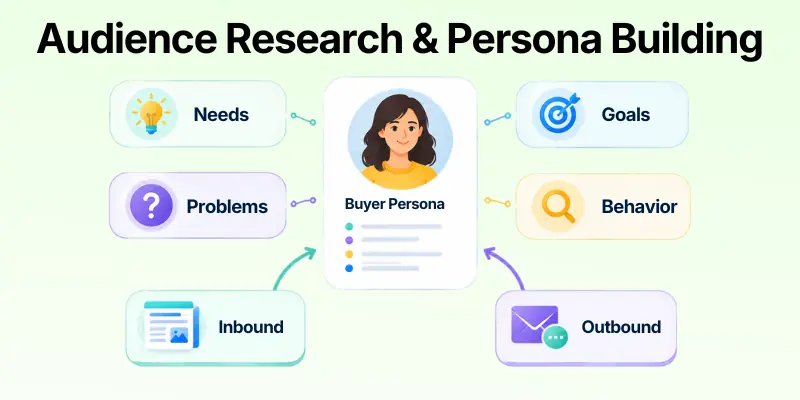
When you know your audience well, both your content (inbound) and outreach (outbound) become much more effective. Without this clarity, your efforts can feel random and won’t convert well. Think of this step as building the foundation of your entire strategy.
Why this is number 1:
- Everything depends on knowing your audience
- Helps you create targeted content and campaigns
- Improves conversion rates
- Reduces wasted budget on the wrong audience
How to do it:
- Create detailed buyer personas
- Research audience pain points and goals
- Analyze competitors’ audience
- Use surveys, polls, or social media insights
Step 2: Goal Setting & Funnel Planning
So guys, the first step is done, now it’s time to get clear on what you actually want to achieve. In this step, you define your goals and map out your marketing funnel from awareness to conversion.
This means understanding how inbound efforts will attract users and how outbound will push them further down the funnel. Without proper planning, your strategy will feel scattered and inconsistent. A clear funnel helps you guide your audience step-by-step toward becoming a customer.
Why this is number 2:
- Gives direction to your marketing efforts
- Helps align inbound and outbound strategies
- Improves lead conversion flow
- Prevents confusion in campaigns
How to do it:
- Set clear goals (traffic, leads, sales)
- Define funnel stages (TOFU, MOFU, BOFU)
- Map content and outreach to each stage
- Use tools like funnels or flowcharts to plan
Step 3: Content Creation (Inbound Assets)
So guys, now that your goals are clear, the next step is to create strong inbound content. This is where you build valuable content that attracts your audience naturally. Blogs, videos, guides, and social posts all come under this.
Your inbound content acts as the base that your outbound strategy will later promote. If your content is weak, even the best outreach won’t convert well.
Why this is number 3:
- Content is the foundation of inbound marketing
- Supports outbound campaigns with value
- Builds trust and authority
- Drives long-term organic traffic
How to do it:
- Write SEO-optimized blog posts
- Create engaging social media content
- Develop videos, guides, or tutorials
- Focus on solving audience problems
Step 4: SEO & Organic Traffic Setup
So guys, your content is ready, but now you need people to actually find it. That’s where SEO comes in. This step is about optimizing your content so it ranks on search engines and brings in organic traffic.
It works hand-in-hand with inbound marketing and supports your outbound efforts as well. When your content ranks, your overall strategy becomes more powerful and sustainable.
Why this is number 4:
- Drives free, long-term traffic
- Supports inbound marketing growth
- Increases visibility and reach
- Reduces dependency on paid ads
How to do it:
- Do keyword research
- Optimize titles, headings, and meta tags
- Build internal and external links
- Improve website speed and user experience
Step 5: Lead Magnet Development
So guys, now you’re getting traffic, but the next step is to convert that traffic into leads. This is where lead magnets come in. A lead magnet is something valuable you offer in exchange for user information, like an email.
It can be an ebook, checklist, template, or free tool. This step connects inbound traffic with outbound follow-up strategies like email marketing or sales outreach.
Why this is number 5:
- Converts visitors into leads
- Builds your email list
- Supports outbound follow-ups
- Increases conversion opportunities
How to do it:
- Create valuable resources (ebooks, checklists)
- Add clear CTAs on your website
- Use popups or landing pages
- Offer something relevant to your audience’s needs
Step 6: Landing Page Optimization
So guys, now you have your lead magnets ready, but where will people actually convert? That’s where landing pages come in. This step is about designing and optimizing pages where users take action, like signing up or downloading something.
A well-optimized landing page makes sure your inbound traffic and outbound campaigns don’t go to waste. Even small improvements here can massively boost your conversions.
Why this is number 6:
- Converts traffic into leads or customers
- Supports both inbound and outbound campaigns
- Improves ROI on ads and outreach
- Reduces bounce rate
How to do it:
- Keep the design simple and focused
- Use strong headlines and clear CTAs
- Add social proof (reviews, testimonials)
- Optimize for mobile and speed
Step 7: Paid Advertising Strategy
So guys, now it’s time to boost your reach using outbound power. Paid advertising helps you instantly reach your target audience instead of waiting for organic growth. This step is about promoting your inbound content, offers, and landing pages through ads.
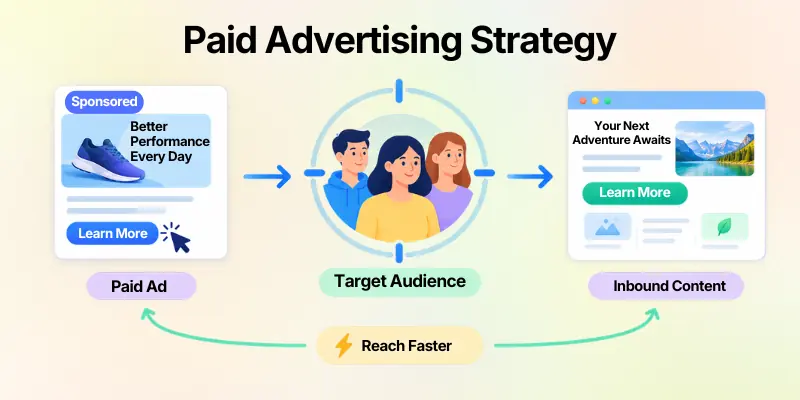
When done right, it brings quick traffic and supports your overall hybrid strategy. It also helps you test what works faster.
Why this is number 7:
- Drives instant traffic
- Supports inbound content promotion
- Helps target specific audiences
- Speeds up results
How to do it:
- Run ads on platforms like Google and social media
- Target specific audience segments
- Promote blogs, lead magnets, or offers
- Track ad performance and adjust
Step 8: Cold Outreach (Email/DM/Calls)
So guys, inbound is bringing people in, but outbound helps you go directly to them. Cold outreach means reaching out to potential customers through emails, messages, or calls. This step helps you connect with people who may not have discovered you yet.
When combined with inbound content, your outreach becomes more personalized and effective.
Why this is number 8:
- Expands your reach beyond organic traffic
- Helps generate leads faster
- Works well for B2B and services
- Supports direct communication
How to do it:
- Send personalized cold emails
- Reach out via LinkedIn or social DMs
- Offer value instead of hard selling
- Follow up consistently
Step 9: Retargeting Campaigns
So guys, not everyone converts on the first visit, and that’s completely normal. Retargeting helps you bring those users back who already showed interest.
This step is about showing ads to people who visited your site or interacted with your content. It strengthens both inbound and outbound efforts by reminding users about your brand.
Why this is number 9:
- Increases conversion rates
- Targets warm audience
- Improves ad efficiency
- Keeps your brand top of mind
How to do it:
- Set up tracking pixels
- Run retargeting ads on platforms
- Show relevant offers or reminders
- Segment audiences for better targeting
Step 10: Email Marketing & Lead Nurturing
So guys, now you have leads, but the journey doesn’t end there. This step is about building relationships with those leads through emails.
Email marketing helps you nurture your audience, provide value, and guide them toward a purchase. It connects inbound lead generation with outbound follow-ups in a very effective way.
Why this is number 10:
- Builds trust with your audience
- Improves conversion rates
- Keeps users engaged
- Supports long-term relationships
How to do it:
- Create email sequences (welcome, nurture, sales)
- Send valuable and relevant content
- Personalize emails based on user behavior
- Use automation tools for consistency
Step 11: CRM & Marketing Automation Integration
So guys, now things are getting more advanced. At this stage, you need systems to manage your leads and automate your marketing efforts. CRM and automation tools help you track user behavior, manage contacts, and send the right message at the right time. This step connects your inbound data with outbound actions, making your entire strategy smarter. It also saves time and reduces manual work.
Why this is number 11:
- Centralizes all customer data
- Automates repetitive tasks
- Improves lead management
- Enhances personalization
How to do it:
- Use a CRM tool to store and manage leads
- Set up automation workflows (emails, follow-ups)
- Track user behavior and interactions
- Integrate marketing tools with your CRM
Step 12: Sales & Marketing Alignment
So guys, now it’s time to make sure your sales and marketing teams are on the same page. Many businesses fail because these two teams work separately. This step is about aligning both teams so they share data, goals, and strategies.
When inbound (marketing) and outbound (sales) work together, your conversions improve significantly. It creates a smooth journey for the customer.
Why this is number 12:
- Improves communication between teams
- Increases conversion rates
- Reduces lead loss
- Creates a unified strategy
How to do it:
- Define shared goals and KPIs
- Use the same CRM and data systems
- Conduct regular team meetings
- Share feedback and insights
Step 13: Multi-Channel Campaign Execution
So guys, now everything is set, it’s time to run your campaigns across multiple channels. This means using different platforms like SEO, social media, email, ads, and outreach together.
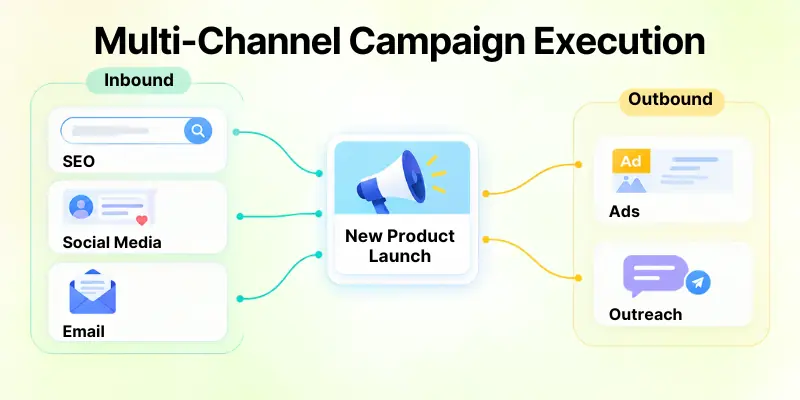
A multi-channel approach ensures your audience sees your message in different places. It strengthens your brand presence and increases chances of conversion.
Why this is number 13:
- Expands reach across platforms
- Reinforces brand messaging
- Improves engagement
- Increases conversion opportunities
How to do it:
- Run campaigns on multiple platforms
- Maintain consistent messaging
- Combine inbound and outbound channels
- Monitor performance across channels
Step 14: Data Tracking & Analytics Setup
So guys, finally, you need to track everything you are doing. Without data, you won’t know what’s working and what’s not. This step is about setting up analytics tools to measure your performance.
It helps you make smarter decisions and continuously improve your strategy. Data is what turns a good strategy into a great one.
Why this is number 14:
- Helps measure performance
- Identifies what works best
- Improves decision-making
- Supports optimization and scaling
How to do it:
- Use analytics tools to track traffic and conversions
- Monitor KPIs like CTR, leads, and sales
- Analyze campaign performance regularly
- Use insights to improve strategies
Step 15: A/B Testing & Optimization
So guys, now your campaigns are running, but this is where you start improving them. A/B testing means comparing two versions of something (like ads, emails, or landing pages) to see which one performs better.
This step helps you make data-driven decisions instead of guessing. Even small changes can bring big improvements in results. It’s all about testing, learning, and optimizing continuously.
Why this is number 15:
- Improves campaign performance
- Helps make data-driven decisions
- Increases conversion rates
- Reduces wasted budget
How to do it:
- Test different headlines, CTAs, and designs
- Run split tests on ads and emails
- Analyze results and pick the best version
- Continuously optimize based on data
Step 16: Scaling & Continuous Improvement
So guys, now that you know what’s working, it’s time to grow and scale your strategy. Scaling means increasing your efforts on the strategies that are already giving results. At the same time, continuous improvement ensures you keep adapting and evolving.
Marketing is never static, so you need to keep refining your approach. This step helps you achieve long-term success.
Why this is number 16:
- Maximizes ROI
- Expands successful campaigns
- Keeps your strategy updated
- Ensures long-term growth
How to do it:
- Increase budget on high-performing campaigns
- Expand to new channels or audiences
- Keep testing and refining strategies
- Stay updated with trends and tools
When Should You (and Shouldn’t You) Combine Inbound and Outbound Marketing?
So guys, now you already know the whole process of how to combine both marketing strategies. But here’s something very important: just because you can combine inbound and outbound marketing doesn’t mean you should always do it.
Timing, business stage, and resources really matter. So let’s understand when this hybrid strategy works best and when you should avoid it.
When to Combine Inbound and Outbound Marketing
Do it when:
- When you want faster results along with long-term growth
- When your inbound traffic is not enough on its own
- When you are launching a new product or service
- When you want to scale your lead generation quickly
- When you have a clear target audience and messaging
- When your business is in a competitive market
- When you already have quality content to promote
- When you want to improve conversion rates across the funnel
When NOT to Combine Inbound and Outbound Marketing
Here you go:
- When you have a very limited budget
- When your inbound foundation (content/SEO) is not ready
- When you don’t clearly understand your target audience
- When your team or tools are not set up properly
- When you are just starting and need to focus on one strategy first
- When you cannot track or measure campaign performance
- When your messaging is not consistent yet
- When you don’t have time to manage multiple channels properly
Best Examples of Combined Marketing Strategies
Now let’s look at some real-world examples where businesses successfully combine inbound and outbound marketing:
- SEO + Paid Ads: Organic content attracts users while ads bring instant traffic to the same landing pages.
- Blog + Cold Email Outreach: Valuable blog content is used in cold emails to build trust and generate replies.
- Social Media + Retargeting Ads: Organic posts build awareness while retargeting ads bring users back to convert.
- Webinars + Email Campaigns: Webinars attract inbound leads while email campaigns follow up to close sales.
Common Mistakes to Avoid
Readers, even though combining inbound and outbound marketing is powerful, many people make mistakes that reduce their results.
Let’s look at what you should avoid so your strategy stays effective:
- Using Outbound Without Inbound Foundation: Running ads or outreach without valuable content leads to poor conversion.
- Inconsistent Messaging: Different messages across channels confuse the audience and reduce trust.
- Ignoring Data Tracking: Not measuring results makes it impossible to improve campaigns.
- Targeting the Wrong Audience: Poor audience targeting wastes budget and reduces ROI.
Tools to Combine Inbound and Outbound Marketing
To successfully run a hybrid strategy, you need the right tools to manage, automate, and track everything. These tools help connect inbound and outbound efforts smoothly:
- CRM Tools: Manage leads and customer data in one place for better tracking and follow-ups.
- Email Marketing Tools: Automate nurturing campaigns and outbound communication effectively.
- SEO Tools: Help optimize content and improve organic visibility for inbound traffic.
- Advertising Platforms: Run paid campaigns to boost reach and support inbound content.
Best Practices for a Successful Hybrid Strategy
Guys, if you want your inbound and outbound marketing to actually work together, you need to follow some proven best practices
- Keep Messaging Consistent: Maintain the same tone and message across all channels for stronger branding.
- Focus on Customer Journey: Align both strategies with each stage of the funnel for better conversions.
- Use Data for Decisions: Always rely on analytics instead of assumptions to improve performance.
- Test and Optimize Regularly: Continuously improve campaigns through testing and performance tracking.
Future of Inbound and Outbound Marketing
So, the second-to-last section, guys, here I need to give you the future prediction.
So as you know, marketing is constantly evolving, and the future clearly belongs to a more integrated approach. Inbound and outbound are no longer separate; they are becoming one unified system powered by data and AI.
- AI-Powered Personalization: Marketing messages will be automatically tailored to each user’s behavior and interest.
- Automation at Scale: More processes will be automated to save time and improve efficiency.
- Omnichannel Experience: Users will interact with brands across multiple connected platforms seamlessly.
- Data-Driven Marketing: Decisions will be fully based on real-time analytics and user behavior insights.
Conclusion
So guys, in this guide we have covered how to combine inbound and outbound marketing in a very detailed and simple way. We started from the basic steps, moved through real strategies, tools, best practices, and also understood when you should and should not use this hybrid approach.
From my personal experience as a marketer, I would honestly suggest you don’t rely on only one strategy. Inbound marketing helps you build trust and long-term growth, while outbound marketing helps you get faster results and more reach. When you combine both properly, your marketing becomes more powerful, balanced, and effective.
Now let’s move to some frequently asked questions to clear any last confusion.
FAQs
Here are some of the most commonly asked questions related to how to combine inbound and outbound marketing:
A hybrid marketing strategy means using both inbound and outbound marketing together. Inbound brings customers through content like blogs and SEO. Outbound reaches customers directly through ads, emails, or calls. When both work together, you get better results and more sales.
You should combine both because they support each other. Inbound helps build trust, and outbound brings fast attention. Together, they give you more reach and better results. It also helps you get customers from different places.
An integrated marketing strategy inbound outbound means using both methods in one plan. You connect your content, ads, and outreach so they work together. This makes your marketing more smooth and organized. It also helps you guide customers better.
Yes, small businesses can use both together easily. You can start with simple content and small ads or emails. You don’t need a big budget to begin. Just start small and grow step by step.
Neither is better on its own. Inbound marketing is great for long-term growth and trust building. Outbound marketing is better for quick results and direct reach. The best approach is to combine both.
So guys, here are some simple tools you can use:
- CRM tools: to manage customer details
- Email tools: to send and follow up emails
- SEO tools: to improve content ranking
- Ad platforms: to run online ads
Inbound marketing creates helpful content like blogs and posts. You can use this content in emails or ads. This makes people trust your message more. It also improves your response rate.
Many people make simple mistakes.
- No clear target audience
- Different messages everywhere
- Not checking results
- Using ads without good content
It depends on how you use it. Inbound can be low cost if you focus on content. Outbound can cost more if you use ads. Using both in balance helps control spending.
Outbound marketing can show results fast, sometimes in days or weeks. Inbound marketing takes more time, usually a few months. When you use both, you get quick results and long-term growth together.