Difference Between SEO and SMM: Complete Guide
Published: 17 Sep 2026
Online marketing uses many strategies to help businesses reach people on the internet. Two of the most popular strategies are Search Engine Optimization and Social Media Marketing.
Both methods help brands increase visibility, attract audiences, and grow their online presence. However, they work on different platforms and follow different marketing approaches.
Search Engine Optimization focuses on improving a website so it appears higher in search engine results. It helps websites gain organic traffic from platforms like Google, Bing, and Yahoo. Businesses use SEO to reach people who actively search for information, products, or services.
Social Media Marketing focuses on promoting brands through social media platforms such as Facebook, Instagram, LinkedIn, TikTok, and X. Businesses create posts, share content, interact with followers, and run campaigns to build brand awareness and customer relationships.
In this guide we will cover the difference between SEO and SMM to help businesses choose the right strategy for their marketing goals.
So without wasting time, let’s dig in!
SEO vs SMM: Key Differences
To understand these differences clearly, we can compare both strategies based on several important factors.
Here are the major factors we will compare:
- Platform Focus
- Traffic Source
- Audience Intent
- Content Strategy
- Speed of Results
- User Engagement
- Marketing Goals
- Competition Level
- Algorithm Influence
- Long-term Value
Let us explore each of these factors in detail.
1. Platform Focus
The most obvious difference between SEO and SMM relates to the platform where marketing takes place. SEO works within search engines where users type queries to find information or solutions. Websites compete to appear in the top search results when people search for specific keywords.
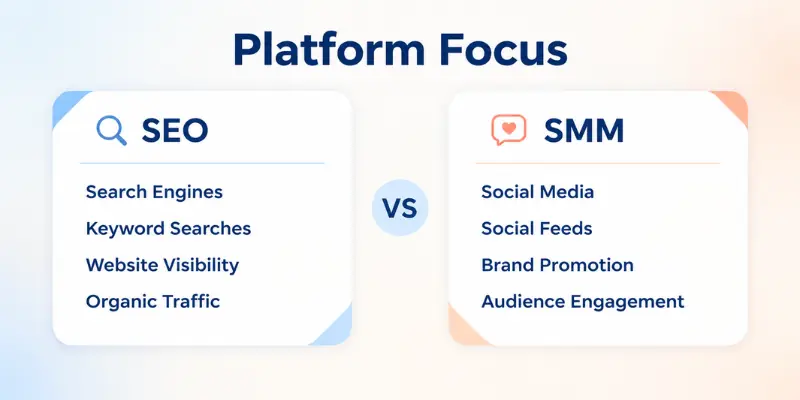
SMM works within social media platforms. Businesses share posts, images, videos, and stories to connect with users who browse social media feeds. The focus stays on building relationships and brand awareness.
Because the platforms differ, the strategies and marketing techniques also differ.
SEO
- Focuses on search engines like Google and Bing
- Targets users who search for information or services
- Improves website visibility in search results
- Works mainly through website optimization
- Helps websites attract organic traffic
SMM
- Focuses on social media platforms like Facebook and Instagram
- Targets users who browse social media feeds
- Promotes brands through posts and campaigns
- Builds community and interaction
- Helps businesses connect directly with audiences
2. Traffic Source
Another major difference involves where the website or brand traffic comes from. SEO generates traffic through organic search results. Users type keywords into search engines, and websites appear based on relevance and authority.
SMM generates traffic through social media platforms. Businesses share posts that encourage users to visit their website, profile, or product page.
This difference means that SEO attracts people who search for solutions, while SMM reaches people who explore social media content.
SEO
- Traffic comes from search engine results
- Users find websites through keyword searches
- Organic rankings bring visitors
- Traffic grows gradually with strong optimization
- Users usually look for specific solutions
SMM
- Traffic comes from social media platforms
- Users click links in posts or profiles
- Content encourages people to visit websites
- Traffic depends on engagement and sharing
- Posts reach audiences through feeds
3. Audience Intent
Audience intent explains why users interact with content. This factor creates a strong difference between SEO and SMM.
Search engine users usually have clear intent. They search for information, products, or solutions to specific problems. SEO content must answer these questions clearly and provide valuable information.
Social media users usually browse content for entertainment, inspiration, or communication. They may not actively search for a product or service. Businesses must create engaging content to capture attention.
Because of this difference, marketers design different types of content for each platform.
SEO
- Users actively search for information
- Content solves problems or answers questions
- Visitors expect useful and detailed information
- Intent often relates to research or purchase
- Keywords reveal user needs
SMM
- Users browse content for entertainment or inspiration
- Content aims to attract attention quickly
- Posts encourage interaction and sharing
- Intent often focuses on social interaction
- Engagement builds relationships
4. Content Strategy
Content plays an important role in both strategies, but the format and purpose differ greatly.
SEO content usually appears in the form of blog posts, guides, landing pages, and tutorials. These pieces provide detailed information and help search engines understand the topic of the page.
SMM content focuses on visual and interactive formats. Businesses share images, short videos, stories, polls, and live streams to capture audience attention.
Because social media users scroll quickly through feeds, content must remain engaging and visually appealing.
SEO
- Uses blog posts and articles
- Content explains topics in detail
- Long form guides help answer questions
- Structured headings improve readability
- Keywords help search engines understand topics
SMM
- Uses images, videos, and stories
- Posts remain short and engaging
- Visual content attracts attention
- Interactive posts increase engagement
- Trends influence content style
5. Speed of Results
Speed of results also differs between these strategies. SEO often requires time before a website achieves high rankings in search engines. Search engines evaluate website authority, content quality, and relevance before improving rankings.
SMM can produce results much faster because posts appear instantly in social media feeds. A popular post can reach thousands of users within hours.
However, social media visibility may decrease quickly once the post stops trending.
SEO
- Requires time to build rankings
- Content gains authority gradually
- Results improve over months
- Long term optimization builds stable traffic
- Search engines evaluate content quality
SMM
- Posts appear instantly in feeds
- Content can go viral quickly
- Engagement grows within hours or days
- Results depend on audience interaction
- Visibility may decrease after trends fade
6. User Engagement
User engagement plays an important role in Social Media Marketing because social platforms focus heavily on interaction. Likes, shares, comments, and follows show that users enjoy the content.
SEO also benefits from user engagement, but search engines evaluate it differently. Metrics such as time on page, click through rate, and bounce rate indicate whether users find the content helpful.
Although engagement matters in both strategies, the interaction style differs.
SEO
- Engagement measured through page metrics
- Longer time on page shows useful content
- Lower bounce rate indicates relevance
- Users focus on reading or learning
- Interaction remains indirect
SMM
- Engagement measured through likes and comments
- Shares increase content reach
- Followers build brand community
- Direct communication with audiences
- Conversations strengthen relationships
7. Marketing Goals
Marketing goals also create an important difference between SEO and SMM. SEO focuses mainly on attracting organic search traffic to a website. Businesses want users to discover their content or services through search engines.
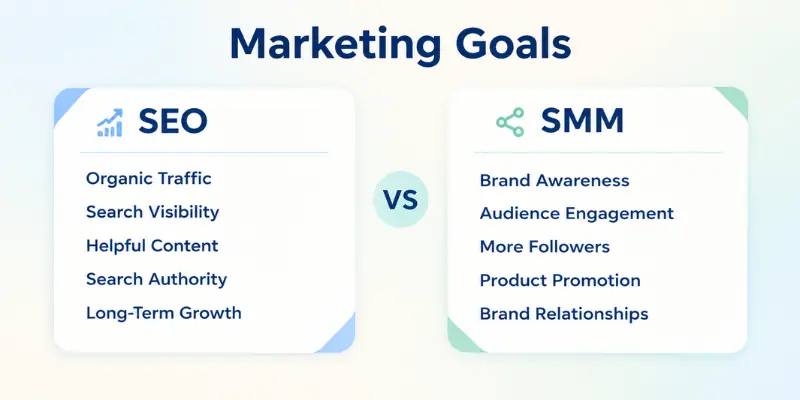
SMM focuses more on brand awareness and community building. Businesses interact with audiences, promote products, and build loyal followers.
Although both strategies can generate leads and sales, their primary goals differ.
SEO
- Increase organic website traffic
- Improve visibility in search results
- Provide helpful information
- Build authority in search engines
- Generate long term traffic growth
SMM
- Build brand awareness
- Increase audience engagement
- Grow social media followers
- Promote products and campaigns
- Strengthen brand relationships
8. Competition Level
Competition exists in both search engines and social media platforms, but the nature of competition differs.
SEO competition depends on website authority and content quality. Websites with strong backlinks and detailed content often rank higher in search results.
SMM competition depends on creativity and engagement. Brands compete to capture audience attention through interesting posts and trends.
Because social media trends change quickly, brands must stay creative and active.
SEO
- Competition depends on website authority
- Backlinks strengthen credibility
- Content depth improves ranking chances
- Established websites often dominate results
- Long term strategy improves competitiveness
SMM
- Competition depends on content creativity
- Trends influence content popularity
- Engagement determines reach
- Consistent posting improves visibility
- Audience connection strengthens performance
9. Algorithm Influence
Algorithms determine how content appears on both search engines and social media platforms.
Search engines use complex algorithms to evaluate website quality, relevance, and authority. These algorithms decide which pages appear in search results.
Social media platforms use algorithms that prioritize engaging content. Posts that receive strong engagement often appear in more user feeds.
Understanding these algorithms helps marketers improve their strategies.
SEO
- Search engines evaluate website relevance
- Algorithms analyze content quality
- Backlinks influence rankings
- Technical optimization improves performance
- Updates may affect rankings
SMM
- Social platforms prioritize engaging posts
- Algorithms promote popular content
- Interaction increases visibility
- Posting consistency improves reach
- Trends influence algorithm behavior
10. Long Term Value
Long term value represents another important difference between the two strategies. SEO often delivers long lasting benefits because high ranking pages can continue attracting traffic for months or even years.
SMM provides quick visibility but often requires constant activity. Posts usually lose visibility after a short period unless they gain strong engagement.
Because of this difference, many businesses rely on SEO for long term growth while using SMM for ongoing audience engagement.
SEO
- Provides long term organic traffic
- Strong pages attract visitors for years
- Website authority grows over time
- Sustainable marketing strategy
- Consistent optimization strengthens rankings
SMM
- Visibility depends on regular posting
- Posts lose reach after some time
- Engagement drives short term visibility
- Requires constant interaction with audience
- Social trends influence performance
SEO vs SMM: Which Strategy Should You Use?
Businesses often ask whether they should focus on SEO or Social Media Marketing. The answer depends on the goals of the business and the type of audience they want to reach.
SEO works best for businesses that want steady website traffic from search engines. It helps companies attract users who actively search for information or solutions.
SMM works best for brands that want to build strong relationships with their audience. Social media helps businesses interact directly with customers and promote brand personality.
Many successful businesses combine both strategies. SEO helps them gain long term search traffic while SMM helps them engage audiences and promote content. Together these strategies create a powerful digital marketing approach.
Final Thoughts
In this guide we have explained what is the difference between SEO and SMM in great detail. Both strategies help businesses grow online visibility, but they operate on different platforms and follow different marketing approaches.
I recommend reading the full guide carefully because each section explains an important difference. You should also check the frequently asked questions below to improve your understanding.
FAQs
Here are some of the most commonly asked questions related to the difference between SEO and SMM:
SEO means improving a website so it appears higher in search engine results. Businesses optimize content and website structure. This helps people find the website when they search for information online. Good SEO increases organic traffic.
SMM stands for Social Media Marketing. Businesses use social media platforms to promote their brand and connect with audiences. They share posts, videos, and updates to attract followers. Social media helps increase brand awareness.
Social Media Marketing usually brings faster results because posts appear instantly in user feeds. SEO often takes more time because search engines evaluate website content and authority. However, SEO delivers long term benefits.
Yes, many businesses combine both strategies. SEO attracts users from search engines while SMM builds engagement on social platforms. Using both methods helps increase visibility across multiple channels.
Beginners often start with Social Media Marketing because it allows quick interaction with audiences. However, learning SEO also helps build long term website traffic. Both strategies offer valuable benefits.
SEO relies heavily on keywords because search engines use them to understand content topics. Social Media Marketing uses hashtags and keywords to help users discover posts. Both strategies benefit from good keyword research.
Businesses invest in SEO to gain long term organic traffic. High ranking pages attract visitors without paid advertising. SEO also helps build credibility and trust with audiences.
Social media helps businesses connect directly with customers. It allows brands to share updates, promotions, and content easily. Engagement with followers builds strong relationships.
Yes, SEO can support social media marketing by driving traffic to shareable content. When websites publish helpful articles, social media users may share them with others. This increases reach and visibility.
Businesses should post consistently to maintain audience engagement. Many brands post several times per week. The exact frequency depends on the platform and audience behavior. Regular posting helps maintain visibility.