Types of SEO Niches: Definition, Example, Pros & Cons
Published: 16 Aug 2025
Choosing the right niche is one of the most important decisions in SEO. Many people spend months creating content, finding keywords, and building backlinks, but they still struggle because they choose the wrong direction from the beginning.
SEO success does not only depend on how much content you publish. It depends on whether your website has a clear focus, understands its audience, and solves the right problems.
Before going into different types of SEO niches, you need to understand one important concept: Directivity.
Directivity means how focused your website is toward a specific audience, topic, and search intent.
A broad website works like an LED bulb. It covers a large area but has less focus. A micro niche works like a torch because it targets a specific direction. A nano niche works like a laser because it focuses on one exact point. In SEO, this focus helps websites build relevance, understand their audience, and create better ranking opportunities.
A multi niche website works differently because it covers multiple topics and targets different audiences, which reduces its overall focus.
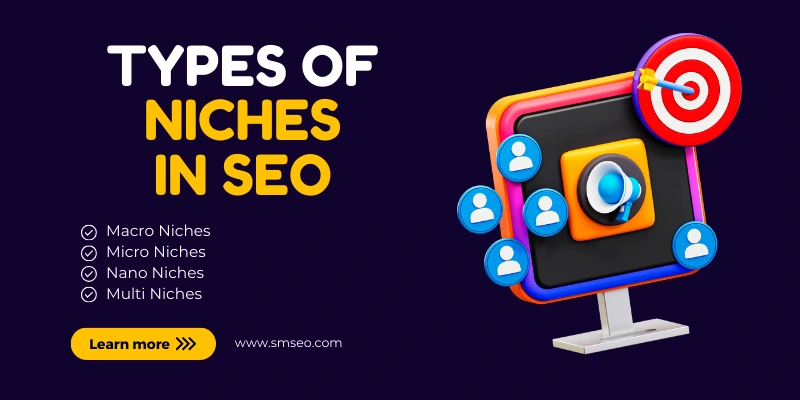
In this guide, we will cover the four main types of SEO niches. We will explain each niche type in detail with examples, advantages, disadvantages, best use cases, and practical SEO recommendations.
Let’s cover each type in detail.
Types of SEO Niches
As you know, niche targeting is a simple but effective way for bloggers to boost their online visibility and connect with their desired target audiences.
But for guys from the vast range of blogging categories, identifying the best niche is quite tough. So, before doing niche research, you should know about these four top niches in SEO:
- Macro Niches – Big and Broad
- Micro Niches – More Focused
- Nano Niches – Super Specific
- Multi Niches – A Bit of Everything
The following sections of this article will discuss all these sorts of SEO niches in detail.
1. Macro Niche
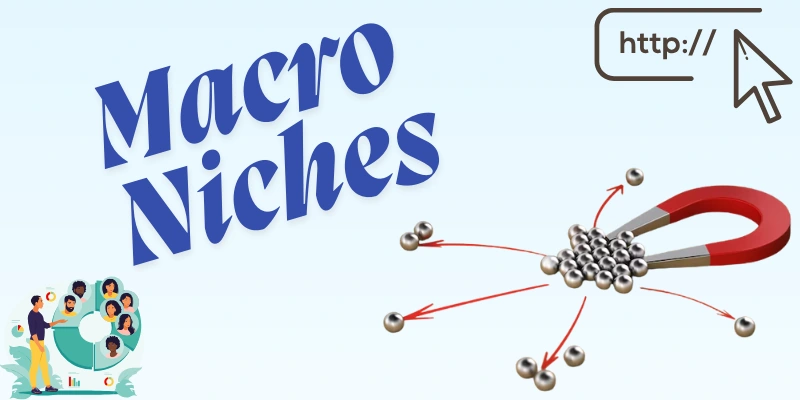
A macro niche represents a broad industry or a large category that contains many smaller topics. It works as the foundation of multiple subcategories. A macro niche does not focus on one specific problem. Instead, it covers an entire market and attracts people with different interests related to that market.
Let us understand this concept through a clear explanation. An example will help us understand it more easily.
Example
For example, Health is a macro niche. A health website does not only talk about one thing. It can publish content about:
- Fitness routines
- Weight loss methods
- Nutrition plans
- Disease information
- Exercise guides
- Healthy lifestyle habits
All these topics belong to the health market.
Similarly, Digital Marketing is another macro niche. It includes:
- SEO
- Google Ads
- Social Media Marketing
- Email Marketing
- Content Marketing
- Affiliate Marketing
Advantages of Macro Niche
A macro niche gives you access to a large market and provides multiple opportunities for traffic, branding, and business growth. Because the niche covers many related topics, you can create a wide content ecosystem and target different types of users over time.
- Huge Traffic Potential: Macro niches attract a massive audience because millions of people search for information, products, and solutions related to broad topics like health, technology, sports, and education.
- Unlimited Content Opportunities: A broad niche gives you endless content ideas because you can cover multiple subtopics, answer different user questions, and continuously expand your website.
- Strong Brand Building Opportunities: Macro niches allow you to build a complete authority brand because you can become a trusted resource covering different aspects of a major industry.
- Multiple Monetization Methods: A large niche provides several earning opportunities through affiliate marketing, advertisements, digital products, online courses, services, sponsorships, and partnerships.
- Easier Expansion in the Future: A macro niche gives you more room to grow because you can enter related subcategories without changing your website direction.
- Ability to Target Different Audiences: Since macro niches include multiple topics, you can attract users with different interests and create multiple traffic sources.
- Higher Business Potential: Large markets create opportunities to build a long-term business instead of only creating a small informational website.
Disadvantages of Macro Niche
Although macro niches provide huge opportunities, they also create bigger challenges because you compete in highly competitive markets.
- Very High Competition: Macro niches usually contain thousands of established websites, making it difficult for new websites to achieve top rankings quickly.
- Requires More Resources: Building authority in a broad niche requires more content, more writers, stronger SEO strategies, and more investment compared to smaller niches.
- Slower Ranking Process: New websites usually take longer to rank because Google needs time to understand their expertise and trust their content.
- Difficult To Build Topical Authority: Covering too many areas can make it harder to prove that your website is an expert in one specific topic.
- Needs Continuous Content Production: Macro niches require regular publishing because competitors constantly create new content and update existing information.
- Harder Keyword Targeting: Finding easy ranking opportunities becomes more challenging because many valuable keywords already have strong competition.
- Higher Maintenance Requirements: Managing a large website with multiple categories requires proper planning, content management, and SEO monitoring.
Personal Recommendation
For beginners, I do not recommend starting directly with a macro niche. A new website usually does not have enough authority, resources, or trust to compete against established websites dominating large markets.
A smarter approach is to start with a micro or nano niche, build topical authority, gain rankings, understand your audience, and then expand gradually into a macro niche.
For example:
Instead of starting with: Health Website
Start with: Weight Loss Website
Then expand into:
Fitness → Nutrition → Healthy Lifestyle
This approach gives you a better chance of ranking faster while building a strong foundation for future growth.
2. Micro Niche
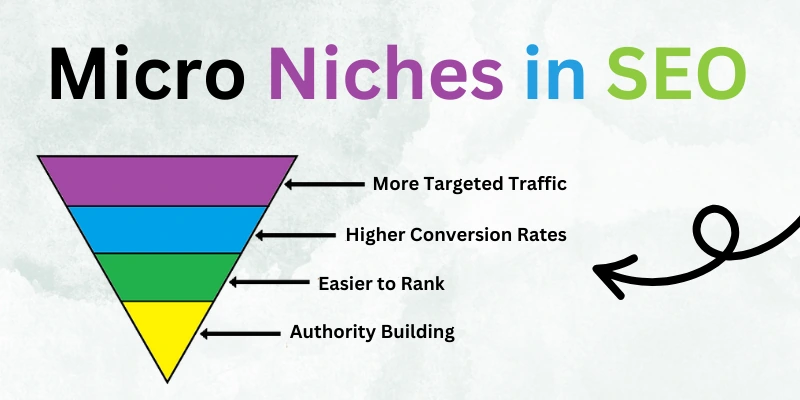
A micro niche is a more focused version of a macro niche. Instead of covering a complete industry, it focuses on one specific category within that industry.
A macro niche covers a large market, while a micro niche narrows that market into a smaller and more targeted area. This helps you understand your audience better because you are no longer trying to attract everyone. You focus on people who have a specific interest, need, or problem.
Let us understand this concept through a clear explanation. An example will help us understand it more easily.
Example
For example, Technology is a macro niche because it covers mobile phones, computers, software, artificial intelligence, and many other topics. But when you narrow it down to Mobile Phone Repairing, it becomes a micro niche.
A mobile phone repairing website can focus on topics like:
- Mobile repair guides
- Common phone problems
- Repair courses
- Tools used for repairing
- Screen replacement methods
- Battery and hardware issues
All these topics target one specific category inside the technology market.
Similarly, Education is a macro niche.
A micro niche inside education can be: Short Courses + Graduation Programs
This website does not cover every education topic. Instead, it focuses on people who want:
- Professional courses
- Skill-based learning
- Degree programs
- Career development options
Another example is: Sports → Cricket + Football
Instead of covering every sport, the website focuses only on two popular sports and creates content around:
- Match analysis
- Player information
- Training guides
- Rules and techniques
- Sports updates
Other examples of micro niches include:
- Food → Fast Food
- Jobs → Government Jobs
- Animals → Pet Animals
- Health → Fitness
A micro niche gives you a clearer direction because you know exactly which audience you want to attract and what type of information you need to provide.
Advantages of Micro Niche
A micro niche provides a balance between traffic potential and competition. It allows you to target a specific audience while still having enough space to create content and grow your website.
- Lower Competition Compared To Macro Niches: Micro niches usually have fewer competitors because you are not fighting in the entire industry. You compete in a smaller section of the market, which gives new websites better ranking opportunities.
- Better Understanding of Audience Needs: When you focus on one category, you clearly understand what your visitors want, what problems they face, and what solutions they are searching for.
- Easier Content Planning: A focused niche makes content creation easier because every article connects with the main topic and supports the overall website direction.
- Stronger Topical Authority: Covering one specific category helps search engines understand your expertise because your website consistently provides information around one subject.
- Higher User Trust: Visitors are more likely to trust a website that focuses on one area instead of a website that publishes random content about different industries.
- Better Conversion Opportunities: A targeted audience usually has stronger interest and buying intent, which can lead to better results for products, services, or affiliate offers.
- Easier To Build A Brand: A micro niche allows you to create a clear identity because people know exactly what your website offers.
- Good Expansion Possibility: After building authority in a micro niche, you can gradually expand into related topics and move towards a larger market.
Disadvantages of Micro Niche
Although micro niches are easier to manage compared to macro niches, they also have some limitations.
- Smaller Audience Size: Because you focus on a specific category, the number of potential visitors is lower compared to broad industries.
- Limited Content Range: A focused topic gives you fewer content directions, so you need proper planning to avoid covering the same ideas repeatedly.
- Growth Can Be Slower After Initial Success: Once you cover most topics in your micro niche, expanding the website requires careful planning.
- Lower Traffic Potential Compared To Macro Niches: A micro niche may rank faster, but the total search volume is usually lower than broad markets.
- Expansion Requires Relevance: You cannot randomly add unrelated topics because it can weaken your website’s focus and confuse your audience.
- Some Niches Have Limited Monetization: Certain micro niches may attract visitors but have fewer products, services, or earning opportunities.
Personal Recommendation
For most beginners, a micro niche is the safest starting point in SEO. It gives you enough focus to build authority but does not limit your growth like an extremely narrow niche.
Instead of starting with: Technology Website
Start with: Mobile Phone Repairing Website
Instead of starting with: Sports Website
Start with: Cricket + Football Training Website
Instead of starting with: Jobs Website
Start with: Government Jobs Website
Once your website gains trust, rankings, and authority, you can expand into related categories.
My recommendation is: Start focused, become an expert in one category, and expand step by step.
A micro niche gives you the right balance between competition, audience size, and long-term growth.
3. Nano Niche
A nano niche is the most focused level of niche selection where you target a very specific topic, audience, product, service, or problem within a micro niche. It takes the concept of specialization one step further by reducing the market size and increasing the level of relevance.
A micro niche already focuses on a specific category, but a nano niche goes deeper into that category and targets a very narrow segment. Instead of trying to attract everyone interested in a particular field, a nano niche focuses on people who have a very specific requirement or search intent.
Let us understand this concept through a clear explanation. An example will help us understand it more easily.
Example
For example, Technology is a macro niche because it covers a complete technology industry, including mobile phones, computers, software, and gadgets.
When we narrow it down:
Technology → Mobile Phone Repairing
it becomes a micro niche.
But when we go even deeper:
Technology → Mobile Phone Repairing → iPhone Repairing
it becomes a nano niche.
A website about iPhone Repairing does not focus on every technology problem. It specifically targets people who need solutions related to iPhone devices.
It can create content about:
- iPhone screen replacement
- iPhone battery problems
- iPhone charging issues
- iPhone software errors
- iPhone repair guides
- iPhone repair tools
- iPhone maintenance tips
All these topics directly connect with one specific audience.
Similarly, Digital Marketing is a macro niche.
It includes:
- SEO
- Google Ads
- Social Media Marketing
- Email Marketing
- Content Marketing
A micro niche inside digital marketing can be:
SEO
But a nano niche inside SEO can be:
Off Page SEO
A website focusing on Off Page SEO can create content about:
- Link building strategies
- Guest posting
- Backlink analysis
- Outreach methods
- Authority building
- Competitor backlink research
The website does not try to teach every part of digital marketing. It focuses on one specific SEO area.
Another example is:
Sports → Cricket → PSL
Sports is a macro niche.
Cricket is a micro niche.
PSL is a nano niche.
A PSL-focused website can publish content about:
- PSL match schedules
- Team analysis
- Player performance
- Match predictions
- PSL history
- Team statistics
The audience becomes much more specific because the website targets people interested in one particular cricket event.
Other examples of nano niches include:
- Health → Cancer → Blood Cancer
- Jobs → Government Jobs → Army Jobs
- Food → Fast Food → Pizza & Zinger
- Animals → Pets → Cat Care
- Fitness → Weight Loss → Weight Loss For Beginners
A nano niche gives you the highest level of focus because you know exactly who you want to attract and what information they are looking for.
Advantages of Nano Niche
A nano niche allows you to target a very specific audience with highly relevant content. Although the audience size becomes smaller, the quality of traffic and search intent usually becomes stronger.
- Extremely Targeted Audience: A nano niche allows you to focus on a very specific group of people who already have a clear interest or problem related to your topic.
- Lower Competition Opportunities: Many large websites ignore extremely specific topics, which creates opportunities for smaller websites to compete and gain rankings.
- Higher Search Intent: Visitors coming from nano niche keywords usually know exactly what they need, which increases the chances of engagement, conversions, and sales.
- Faster Authority Building: When your website consistently covers one narrow topic, users and search engines can recognize your expertise more easily.
- Better Content Relevance: Every article directly supports the main topic, which helps create a strong connection between your pages.
- Easier Keyword Targeting: Nano niches make keyword research simpler because you focus on a limited group of highly relevant search terms.
- Higher Conversion Possibility: A visitor searching for a specific solution is more likely to take action compared to someone searching for a broad topic.
- Strong Community Building: A highly focused audience often creates stronger engagement because visitors share the same interest or problem.
Disadvantages of Nano Niche
Although nano niches provide strong focus and better targeting, they also come with some limitations because the market becomes very narrow.
- Limited Audience Size: Since the niche targets a very specific group, the total number of potential visitors is usually smaller compared to macro and micro niches.
- Lower Traffic Potential: Even if you rank successfully, the total search volume may remain limited because fewer people search for extremely specific topics.
- Limited Content Opportunities: A narrow topic can reduce the number of available content ideas, and you may cover the main topics faster.
- Growth Challenges: Expanding a nano niche website requires careful planning because adding unrelated topics can damage the website focus.
- Lower Revenue Potential In Some Niches: Some nano niches may have limited products, services, or affiliate opportunities because the audience is very specific.
- Dependency On Market Demand: If interest in the specific topic decreases, the website may experience a drop in traffic because it depends on a smaller audience.
Personal Recommendation
A nano niche is one of the best starting points for beginners who want to build an SEO website with limited resources. Instead of competing in a huge market, you start with a smaller target where you can create highly relevant content and build authority faster.
For example:
Instead of starting with: Digital Marketing Website
Start with: Off Page SEO Website
Instead of starting with: Health Website
Start with: Blood Cancer Information Website
Instead of starting with: Job Website
Start with: Army Jobs Website
Instead of starting with: Food Website
Start with: Pizza & Zinger Reviews Website
Once your nano niche website gains rankings, traffic, and authority, you can gradually expand into related micro and macro categories.
My recommendation is: Start narrow, dominate your specific topic, build trust, and expand when your website becomes strong.
A nano niche gives beginners the strongest focus because it allows them to compete through relevance instead of competing only through website size and authority.
4. Multi Niche
A multi niche website is different from macro, micro, and nano niches because it does not focus on one specific category or a single direction. Instead, it covers multiple topics from different industries under one website.
In a multi niche approach, the website owner creates content for different audiences instead of targeting one specific group. The main purpose of this model is to attract traffic from various categories and create multiple opportunities through different topics.
Let us understand this concept through a clear explanation. An example will help us understand it more easily.
Example
For example, a website covering only Technology is a focused niche website.
But a website covering:
- Technology
- Sports
- Jobs
- Health
- Entertainment
- Education
becomes a multi niche website.
This type of website works like a large information platform where users can find different types of content in one place.
Unlike macro, micro, and nano niches, a multi niche website does not follow one clear direction.
- A health website attracts people interested in health.
- A cricket website attracts cricket fans.
- An iPhone repair website attracts iPhone users.
- But a multi niche website attracts different types of visitors with different interests.
For example: A person visiting the website for government job updates may not be interested in football articles.
A person reading about smartphone reviews may not care about weight loss content. Because of this, multi niche websites have lower directivity compared to focused niche websites.
Example 1: General Information Website
A website that publishes:
- Technology articles
- Health guides
- Education information
- Job updates
- Entertainment news
This website targets a wide audience.
Example 2: News Website
Many news websites follow a multi niche model.
They cover:
- Politics
- Sports
- Business
- Technology
- Lifestyle
- Entertainment
Their goal is not to dominate one topic but to attract visitors from different areas.
Example 3: Magazine Style Website
A magazine website can publish content about:
- Travel
- Fashion
- Food
- Fitness
- Finance
- Career
The website becomes a general resource covering multiple interests.
Advantages of Multi Niche
A multi niche website provides flexibility because you are not limited to one category. It allows you to explore different markets, attract various audiences, and create multiple growth opportunities.
- Large Audience Reach: A multi niche website can attract visitors from different categories because it covers various topics instead of depending on one audience.
- Unlimited Content Possibilities: Since the website covers multiple industries, you can create content around many different subjects and rarely run out of ideas.
- Multiple Traffic Sources: A multi niche website can receive visitors from different search categories, reducing dependence on one specific topic.
- Different Monetization Opportunities: Covering multiple industries allows you to earn through different methods such as advertisements, affiliate products, sponsored content, and services.
- Freedom To Test Different Niches: A multi niche website allows you to experiment with different topics and identify which categories perform better.
- Long-Term Expansion Opportunities: Since the website already covers multiple areas, you have more flexibility to add new categories in the future.
- Suitable For Large Content Teams: Businesses with multiple writers and resources can manage different categories more effectively.
Disadvantages of Multi Niche
Although multi niche websites provide many opportunities, they also create serious SEO challenges because maintaining authority across different topics requires significant effort.
- Weak Topical Authority: Search engines may find it harder to understand what your website is mainly about because you cover multiple unrelated topics.
- Lower Directivity: A multi niche website does not have one clear audience, which makes it harder to create a strong connection with visitors.
- Difficult Brand Positioning: Users may struggle to understand what your website specializes in because it covers many different industries.
- Requires More Content Resources: Managing multiple categories requires more writers, more research, and better content planning.
- Harder SEO Management: Each category may require different keyword strategies, competitors, and content approaches.
- Lower Trust In Some Industries: Certain industries require strong expertise and authority. Covering too many topics can make it harder to prove expertise.
- More Complex Internal Linking: Managing connections between different categories becomes more difficult compared to a focused niche website.
Personal Recommendation
For beginners, I usually do not recommend starting with a multi niche website.
The biggest challenge is that new websites need to build trust and authority first. When you publish content about many unrelated topics, it becomes difficult for both users and search engines to understand your main expertise.
A better approach is to start with a focused niche.
For example:
Instead of creating: Technology + Sports + Jobs + Health Website
Start with: Technology Website
Then build authority around technology.
After gaining rankings, traffic, and trust, you can gradually expand into related categories.
However, if you have:
- A content team
- Strong SEO experience
- A clear publishing strategy
- Enough resources
then a multi niche website can become a powerful platform.
My recommendation: Beginners should build authority first with a micro or nano niche. Experienced publishers can use a multi niche strategy when they have the resources to manage multiple categories properly.
A multi niche website gives you more opportunities, but without proper planning, it can easily become a website that talks about everything but becomes an expert in nothing.
Conclusion
In this article, we’ve explored four main types of niches: macro, micro, nano, and multi-niche.
To wrap up, I recommend starting with a micro-niche or nano-niche if you’re a beginner. A micro-niche strikes the right balance—it’s focused, easier to manage, and helps you build expertise while attracting a dedicated audience. On the other hand, a nano-niche is perfect for those who want to target a highly specific and engaged audience, although it may require more effort to find growth opportunities.
If you’re experienced or plan to focus on guest blogging or have the resources to manage a larger site, a macro-niche can be a great choice. It allows you to cover a wide range of topics and attract a broader audience, but it also requires careful management to maintain quality and consistency.
Choosing the right niche depends on your goals and resources, but starting small with a micro- or nano-niche is often the best way to establish yourself in the SEO world.
FAQs
Here are the most frequently asked questions about types of niches in the SEO world.
A niche in SEO is a specific topic or market your website focuses on. It helps attract people interested in that exact subject. This makes it easier to create useful content and target the right audience. A clear niche can improve rankings and engagement.
A macro niche is a big topic that includes many smaller subjects. It has a lot of competition, so ranking in search results can be harder. Managing it takes more time and effort because you need a lot of content. Examples include health, travel, or technology.
A micro niche is a small and specific topic within a bigger category. It’s easier to manage and less competitive than a macro niche. It often attracts a more dedicated audience. Examples include vegan keto recipes or budget travel tips.
A nano niche is even more specific than a micro niche. It targets a very small group of people with a highly focused interest. This can help you rank faster but limits audience size. An example is “vegan keto recipes for athletes”.
A multi-niche blog covers several topics instead of one. It can reach a wider audience but is harder to manage. You need to create different types of content and stay consistent across all topics. This often requires more time and resources.
Beginners often do well with a micro niche. It’s small, easier to manage, and less competitive. This allows you to focus on quality content and grow a loyal audience. You can expand into other topics later.
A macro niche is challenging because it covers many topics. This means more competition and the need for lots of content. It can take longer to rank well in search results. Staying organized is also harder.
Yes, you can start with a nano niche. It’s very specific, so competition is low, and you can rank faster. However, the small audience size may limit growth. You can always expand to related topics later.
A multi-niche blog needs content in many areas. This takes more time, research, and planning. It’s harder to keep a consistent style and audience focus. Without a clear plan, growth can be slow.
The best niche depends on your goals and audience. Macro niches cover big topics with high competition, while micro niches are smaller and easier to rank for. Nano niches are very specific and have the least competition but a smaller audience. Pick one that fits your resources and growth plans.