Difference Between SEO and Digital Marketing: Explained
Published: 26 Sep 2026
Many people confuse search engine optimization and digital marketing. Both terms appear frequently in online marketing discussions, and both help businesses grow their presence on the internet. However, they do not mean the same thing.
Search engine optimization represents one specific strategy, while digital marketing represents a broader marketing approach that includes many different channels.
Search engine optimization focuses on improving a website so that it ranks higher in search engine results. It helps websites attract organic traffic from search engines such as Google, Bing, and Yahoo. Businesses use SEO to reach people who actively search for information, products, or services online.
Digital marketing includes all marketing activities that happen on digital platforms. It covers many strategies such as social media marketing, email marketing, content marketing, paid advertising, influencer marketing, and search engine marketing. Businesses use digital marketing to reach audiences across websites, apps, social media platforms, and search engines.
In this guide we will cover the difference between SEO and digital marketing with great detail.
So instead of wasting time, let’s dig in!
SEO vs Digital Marketing: Key Differences
To understand the differences clearly, we can compare both based on several important factors.
Here are the major factors we will compare:
- Scope and Meaning
- Marketing Channels
- Traffic Sources
- Strategy Focus
- Cost Structure
- Time to See Results
- Content Usage
- Audience Targeting
- Marketing Goals
- Long term Value
Let us explore each factor in detail.
1. Scope and Meaning
The most important difference between SEO and Digital Marketing relates to their scope. SEO represents a single strategy that focuses on improving website rankings in search engines. Digital Marketing represents a complete marketing system that includes many online marketing methods.
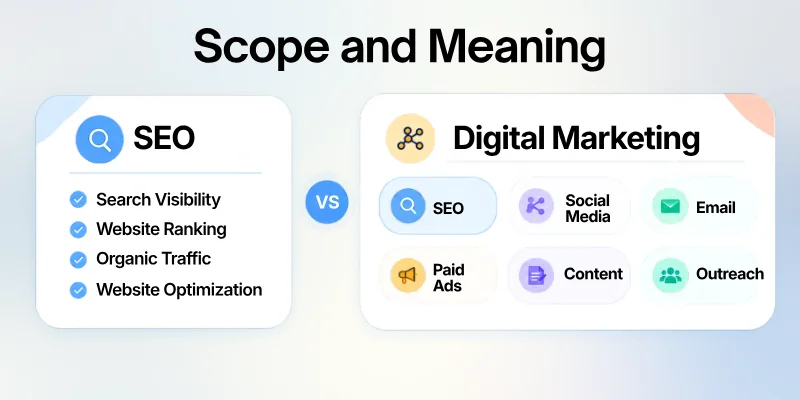
SEO works as a component of digital marketing. Businesses use it specifically to gain organic traffic from search engines. Digital marketing covers all forms of online promotion and communication.
Because of this relationship, SEO plays an important role inside a larger digital marketing strategy.
SEO
- Focuses on search engine visibility
- Improves website ranking in search results
- Targets organic traffic
- Represents one marketing technique
- Works mainly through website optimization
Digital Marketing
- Covers all forms of online marketing
- Includes multiple marketing channels
- Reaches audiences across many platforms
- Combines various promotional strategies
- Represents a complete marketing ecosystem
2. Marketing Channels
Another key difference involves the number of marketing channels used in each strategy. SEO relies mainly on search engines as the primary channel for traffic and visibility.
Digital Marketing uses many channels to reach audiences. These channels include social media platforms, email campaigns, search engines, websites, online advertisements, and mobile applications.
Because digital marketing uses multiple channels, businesses can reach audiences in many different ways.
SEO
- Uses search engines as the main platform
- Targets users who search online
- Focuses on website visibility in search results
- Works mainly through website pages
- Relies on search engine algorithms
Digital Marketing
- Uses many digital platforms
- Includes social media, email, and websites
- Uses online advertising networks
- Connects with audiences through different channels
- Combines multiple marketing tools
3. Traffic Sources
Traffic sources also create a clear difference between SEO and Digital Marketing. SEO generates traffic mainly from organic search results. When users type keywords into search engines, optimized websites appear in the results and attract visitors.
Digital Marketing can generate traffic from many sources. These include social media posts, email newsletters, paid advertisements, influencer promotions, and website referrals.
Because digital marketing uses many channels, it often drives traffic from several different directions.
SEO
- Traffic comes mainly from search engines
- Organic rankings bring website visitors
- Users find websites through keyword searches
- Traffic grows gradually through optimization
- No payment required for each click
Digital Marketing
- Traffic comes from multiple digital platforms
- Social media posts bring visitors
- Email campaigns drive website visits
- Paid ads attract targeted audiences
- Influencer collaborations generate traffic
4. Strategy Focus
SEO focuses mainly on improving website visibility within search engines. Marketers optimize website content, technical performance, and backlinks to improve search rankings.
Digital Marketing focuses on building brand awareness, customer engagement, and online sales through many different marketing methods. Marketers create campaigns across multiple platforms to attract audiences.
Because of this difference, SEO focuses more on search engines while digital marketing focuses on overall online presence.
SEO
- Focuses on search engine rankings
- Improves website structure and content
- Targets users who search for solutions
- Builds authority in search engines
- Strengthens organic visibility
Digital Marketing
- Focuses on overall online promotion
- Builds brand awareness across platforms
- Uses multiple marketing campaigns
- Engages audiences through different channels
- Promotes products and services online
5. Cost Structure
Cost structure differs between SEO and digital marketing strategies. SEO usually focuses on organic traffic, which means businesses do not pay search engines for each click.
Digital Marketing includes both free and paid marketing methods. Businesses may run paid advertisements, sponsor influencer posts, or invest in social media promotions.
Because digital marketing includes many strategies, the cost structure varies widely depending on the chosen channels.
SEO
- Focuses mainly on organic traffic
- No payment required for each visitor
- Investment goes into content and optimization
- Long term strategy reduces advertising costs
- Requires tools and expertise
Digital Marketing
- Includes both free and paid marketing methods
- Businesses may invest in advertisements
- Budgets support campaign performance
- Marketing costs vary by platform
- Paid promotions increase reach quickly
6. Time to See Results
Another major difference relates to the speed of results. SEO often takes time before websites achieve strong rankings. Search engines evaluate website quality, relevance, and authority before improving visibility.
Digital Marketing can deliver faster results through paid advertising and social media campaigns. Businesses can launch campaigns and start attracting attention quickly.
However, some digital marketing strategies also require time to build strong audience engagement.
SEO
- Requires patience and long term effort
- Search engines evaluate content gradually
- Rankings improve over time
- Organic traffic grows steadily
- Consistent optimization improves results
Digital Marketing
- Some campaigns deliver quick results
- Paid advertising increases visibility instantly
- Social media posts reach audiences quickly
- Email campaigns generate immediate engagement
- Marketing performance changes rapidly
7. Content Usage
Content plays an important role in both SEO and Digital Marketing, but the purpose of content differs slightly.
SEO content usually focuses on providing helpful information to users. Blog posts, guides, and tutorials answer questions that people search for online. This content helps search engines understand website topics.
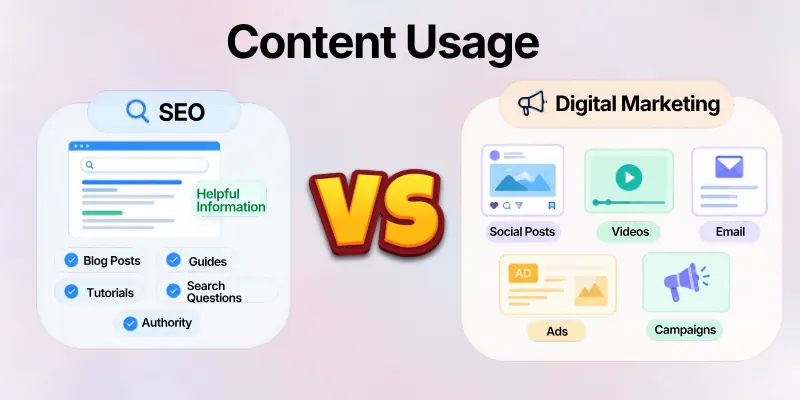
Digital Marketing content includes many formats such as social media posts, promotional videos, email newsletters, and advertisements. These pieces focus on attracting attention and promoting brands.
Because digital marketing uses many platforms, content formats vary widely.
SEO
- Uses detailed blog posts and guides
- Content answers user questions
- Structured headings improve readability
- Keywords help search engines understand topics
- Informational content builds authority
Digital Marketing
- Uses videos, images, and posts
- Promotional campaigns attract attention
- Email content communicates with subscribers
- Social media posts increase engagement
- Content supports marketing campaigns
8. Audience Targeting
Audience targeting also differs between these strategies. SEO targets people who actively search for information online. Keywords reveal user intent, which helps marketers create relevant content.
Digital Marketing allows businesses to target audiences in many ways. Advertisers can target people based on interests, demographics, location, or behavior.
This targeting flexibility helps businesses reach very specific groups of users.
SEO
- Targets users based on search queries
- Keywords reveal user needs
- Content answers specific questions
- Traffic comes from search engine users
- Audience intent focuses on solutions
Digital Marketing
- Targets audiences through multiple filters
- Platforms allow demographic targeting
- Interests and behavior guide campaigns
- Advertisements reach specific groups
- Marketing messages vary by audience
9. Marketing Goals
Marketing goals also highlight the difference between SEO and digital marketing strategies. SEO mainly focuses on improving search engine visibility and attracting organic website traffic.
Digital Marketing focuses on broader goals such as brand awareness, lead generation, customer engagement, and online sales.
Because digital marketing includes many strategies, businesses can pursue different marketing objectives.
SEO
- Increase organic search traffic
- Improve website rankings
- Provide helpful information to users
- Build website authority
- Strengthen search engine visibility
Digital Marketing
- Increase brand awareness
- Generate leads and sales
- Engage audiences across platforms
- Promote products and services
- Build strong customer relationships
10. Long Term Value
Long term value represents another important difference. SEO usually delivers long lasting benefits because strong search rankings can attract traffic for months or years.
Digital Marketing campaigns sometimes focus on short term promotions or seasonal campaigns. However, long term strategies such as email marketing and content marketing can also provide lasting value.
Because SEO builds authority gradually, it often plays a major role in sustainable online growth.
SEO
- Provides long term organic traffic
- High ranking pages attract visitors consistently
- Website authority grows over time
- Sustainable marketing strategy
- Content continues generating traffic
Digital Marketing
- Campaigns may focus on short term promotions
- Paid advertisements bring quick results
- Social media engagement builds brand loyalty
- Multiple strategies support marketing growth
- Long term success depends on consistent campaigns
SEO vs Digital Marketing: Which One Should You Use?
Businesses often ask whether they should focus on SEO or digital marketing. The answer depends on business goals and marketing resources.
SEO works best for businesses that want steady website traffic from search engines. It helps companies attract people who actively search for solutions, products, or services.
Digital Marketing works best for businesses that want to reach audiences across many online platforms. It helps companies build brand awareness, communicate with customers, and promote products through various channels.
Many successful businesses combine SEO with other digital marketing strategies. SEO brings organic traffic while other channels such as social media and email marketing increase brand engagement. Together they create a strong and balanced marketing strategy.
Final Thoughts
In this guide we have explained what is the difference between SEO & Digital Marketing in great detail. Both concepts play important roles in online marketing, but they represent different levels of marketing strategy.
I recommend reading this complete guide carefully because each section explains an important difference. You should also review the frequently asked questions below to strengthen your understanding.
FAQs
Here are some of the most commonly asked questions related to the difference between SEO and digital marketing:
SEO means improving a website so that it appears higher in search engine results. Businesses optimize content, keywords, and website structure. This helps people find the website when they search online. Good SEO increases organic traffic.
Digital Marketing refers to all marketing activities that happen on digital platforms. Businesses promote their products or services through websites, social media, email, and online ads. It helps brands reach audiences on the internet.
Yes, SEO is a part of digital marketing. It focuses specifically on improving website rankings in search engines. Digital marketing includes many other strategies such as social media marketing and email marketing.
Digital marketing campaigns such as paid ads can deliver quick results. SEO usually takes more time because search engines evaluate website content gradually. However, SEO provides long term traffic benefits.
Yes, businesses often combine both strategies. SEO brings organic search traffic while other digital marketing channels promote the brand across different platforms. Together they create a stronger marketing approach.
Yes, content plays an important role in both strategies. SEO uses articles and guides to answer user questions. Digital marketing uses many content types such as videos, posts, and emails.
Businesses invest in SEO to gain organic traffic from search engines. High rankings help websites attract visitors without paying for ads. SEO also builds credibility and trust.
Digital marketing channels include social media platforms, email marketing, search engines, online advertisements, and content marketing. Businesses use these channels to reach audiences online.
Digital marketing does not always require advertising. Some strategies such as SEO and content marketing focus on organic growth. However, paid ads can increase reach quickly.
SEO often provides strong long term growth because high ranking pages attract traffic over time. Digital marketing strategies can also support long term growth when businesses use multiple channels consistently.