What is Social Media Marketing: Guide to SMM
Published: 26 Aug 2026
Are you confused about what is social media marketing? You’ve probably heard people say it’s about posting on Facebook, Instagram, or TikTok, but that’s only part of the story.
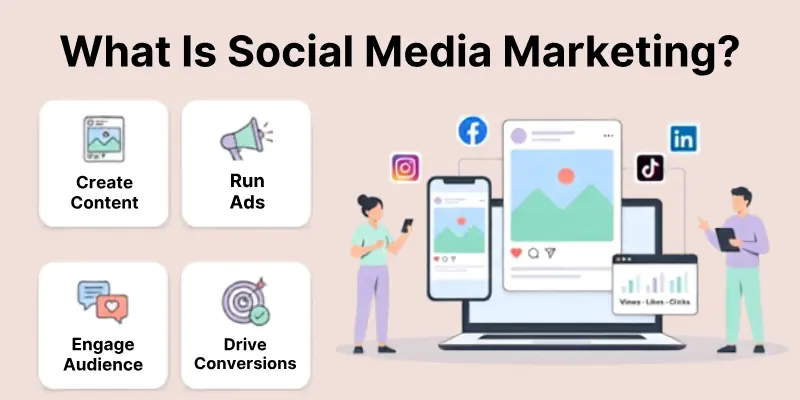
Social media marketing is much more than just sharing content; it’s a strategic approach to connect with your audience, build your brand, and drive sales using social platforms. In this guide, we’ll break down exactly what social media marketing is, how it works, and why it’s essential for businesses today.
Let’s dig in!
What is Social Media Marketing?
Social Media Marketing involves using platforms like Facebook, Instagram, LinkedIn, Twitter, and TikTok to promote your business. It includes content creation, paid advertising, community management, and analytics to optimize campaigns. The main goal is to build relationships, increase brand awareness, and drive conversions through engaging online interactions.
Why is Social Media Marketing Important?
Social media has billions of active users worldwide, making it a powerful channel for reaching potential customers. Effective SMM helps businesses:
- Increase brand awareness
- Engage with a targeted audience
- Drive website traffic and conversions
- Build trust and credibility
- Gather insights and feedback from customers
A strong social media presence can also improve customer loyalty and support other marketing channels like email marketing, content marketing, and SEO.
Key Components of Social Media Marketing
To succeed in social media marketing, it’s important to focus on key components that work together to grow your brand and engage your audience.
Each element plays a unique role in building visibility, trust, and results on social platforms.
- Content Strategy: This is the backbone of your social media efforts. It involves planning what type of content to post, how often, and who it’s for. A strong content strategy ensures your posts reach the right audience and encourage engagement, whether it’s through informative blogs, entertaining videos, or helpful tips.
- Visual Branding: Consistency matters. Using the same colors, logos, and style across all platforms makes your brand recognizable and professional. Strong visual branding helps your audience instantly identify your content and builds trust over time.
- Engagement & Interaction: Social media is not a one-way street. Responding to comments, messages, and mentions shows your audience that you care. Active engagement helps build strong relationships, loyalty, and a community around your brand.
- Paid Advertising: Organic reach is limited, so paid ads help you reach more people quickly. Targeted campaigns allow you to show your content to specific audiences based on interests, location, or behavior. This drives more clicks, leads, and sales efficiently.
- Analytics & Reporting: You can’t improve what you don’t measure. Tracking key performance indicators (KPIs) like engagement, reach, clicks, and conversions helps you understand what works. Regular reporting lets you refine your strategy for better results over time.
Types of Social Media Marketing
There are several types of social media marketing strategies:
- Organic Social Media Marketing: Posting content naturally to grow followers and engagement without paid ads.
- Paid Social Media Advertising: Using paid campaigns like Facebook Ads, Instagram Ads, or LinkedIn Sponsored Content to reach a wider audience.
- Influencer Marketing: Collaborating with influencers to promote products and increase brand visibility.
- Content Marketing on Social Media: Sharing blogs, videos, infographics, and other content to educate and engage audiences.
- Community Management: Building and nurturing online communities through engagement, comments, and messages.
Popular Social Media Platforms for Marketing
The major social media platforms for marketing are:
- Facebook: Best for community engagement and paid campaigns.
- Instagram: Ideal for visual storytelling, reels, and influencer marketing.
- LinkedIn: Perfect for B2B marketing and professional networking.
- Twitter/X: Real-time updates, trends, and customer support.
- TikTok: Short-form video content for younger audiences.
- Pinterest: Visual search and inspiration-driven marketing.
- YouTube: Long-form video content, tutorials, and vlogs.
Social Media Marketing vs Digital Marketing
While social media marketing (SMM) is a part of digital marketing, there are key differences:
- Scope: Digital marketing covers all online channels, including SEO, SEM, email marketing, affiliate marketing, and content marketing.
- Focus: Social media marketing specifically focuses on promoting content and engaging audiences on social platforms like Facebook, Instagram, TikTok, and LinkedIn.
- Objective: SMM aims to build relationships, brand awareness, and engagement, while digital marketing also focuses on traffic, leads, and conversions across multiple channels.
- Strategy: Social media strategies revolve around content calendars, visuals, and interactive posts, whereas digital marketing strategies may include paid ads, email campaigns, and SEO optimizations.
Challenges of Social Media Marketing
While social media marketing offers many benefits, it also comes with some real challenges:
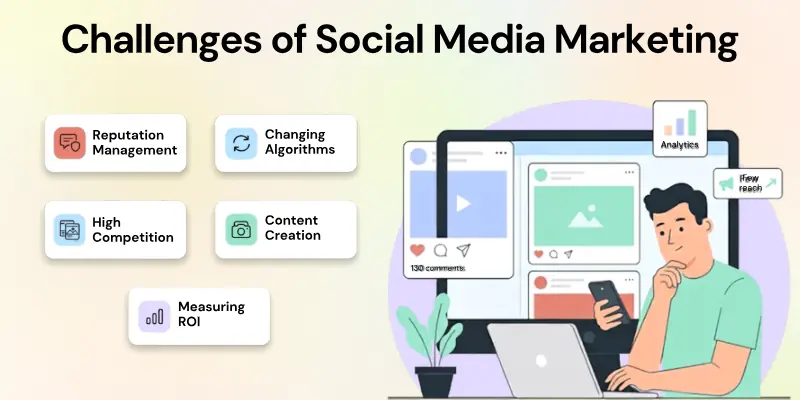
- Changing Algorithms: Social media platforms update their algorithms frequently, which can affect your reach and engagement. You need to stay updated and adjust your strategy regularly.
- Content Creation: Creating high-quality and consistent content takes time and effort. You must plan, design, and post regularly to keep your audience engaged.
- Measuring ROI: It can be difficult to track the exact return on investment from social media. You need to analyze multiple metrics to understand performance.
- Managing Reputation: Negative comments or feedback can impact your brand image. You need to respond professionally and handle issues carefully.
- High Competition: Many brands are competing for attention on social media. You need unique ideas and strong content to stand out.
Best Practices for Social Media Marketing
To get better results from social media marketing, follow these proven practices:
- Post Consistently: Posting regularly keeps your brand active and visible. Choose the right time when your audience is most active for better engagement.
- Focus on Quality Content: Always create content that is useful, engaging, and relevant. High-quality posts attract more attention and build trust with your audience.
- Use Hashtags Smartly: Use relevant hashtags to increase your reach. Avoid overusing them and focus on quality rather than quantity.
- Engage with Your Audience: Reply to comments, messages, and use polls or questions. This builds strong relationships and keeps your audience connected.
- Use Analytics: Track your performance using insights and analytics tools. This helps you understand what works and improve your strategy.
- Test Paid Campaigns: Run paid ads to reach a wider and targeted audience. Testing different campaigns helps you find what brings the best results.
Common Mistakes to Avoid
Avoid these common mistakes to improve your social media marketing results:
- Posting Without Consistency: Posting irregularly or without a clear plan can confuse your audience. A consistent schedule helps keep your brand active and visible.
- Ignoring Audience Engagement: Not replying to comments or messages can make your audience feel ignored. Engagement is key to building trust and strong relationships.
- Relying on One Platform: Depending on only one platform is risky. It’s better to diversify and reach your audience across multiple channels.
- Using Low-Quality Content: Poor visuals or weak content can reduce engagement. Always focus on clear, attractive, and valuable content.
- Not Tracking Performance: If you don’t track metrics, you won’t know what’s working. Monitoring performance helps you improve your strategy over time.
How to Get Started with Social Media Marketing
Follow these simple steps to start your social media marketing journey the right way:
- Define Your Goals: Start by deciding what you want to achieve, such as brand awareness, leads, or sales. Clear goals help you stay focused and measure success.
- Identify Your Target Audience: Understand who your audience is, their interests, and where they spend time online. This helps you create content that connects with them.
- Choose the Right Platforms: Not every platform is for every business. Select platforms where your audience is most active, like Instagram, Facebook, LinkedIn, or TikTok.
- Create a Content Calendar: Plan your posts in advance to stay consistent. A content calendar helps you organize ideas and maintain regular posting.
- Engage and Build Community: Interact with your audience through comments, messages, and discussions. Building a community increases trust and loyalty.
- Run Small Paid Campaigns: Start with a small budget to test ads and targeting. This helps you understand what works before scaling.
- Analyze and Optimize: Track your results using analytics tools. Improve your strategy based on what performs best.
Future of Social Media Marketing
Social media marketing is evolving rapidly with new technologies and trends. AI-driven tools are helping marketers create content, automate tasks, and target the right audience more effectively. Video-first content, live streaming, and short-form videos are becoming more popular, as they grab attention quickly and increase engagement.
At the same time, technologies like AR and VR are creating more interactive and immersive experiences for users. Marketers are also focusing more on personalization, using data to show the right content to the right people. Influencer marketing and automation will continue to grow, helping brands connect with audiences in more natural and innovative ways.
Overall, the future of social media marketing is about being more personal, more creative, and more data-driven.
Final Thoughts
In this guide, we have covered what is social media marketing in detail, including its key components, strategies, and best practices.
From my experience, I always recommend starting simple, focus on understanding your audience, creating quality content, and staying consistent rather than trying to do everything at once. Social media success takes time, so be patient and keep improving your approach.
If you want to learn more, check out the FAQs below for quick answers to common questions.
FAQs
Here are some of the most commonly asked questions related to what is social media marketing:
Social media marketing is the use of social platforms to promote a business or brand. It helps you connect with your audience and share content. You can build trust and increase visibility through regular posts. It also helps drive traffic and sales.
Social media helps businesses reach a large audience quickly. It increases brand awareness and builds relationships with customers. It also helps you stay connected and understand your audience better. This can lead to more engagement and sales.
The best platform depends on your business and audience. Instagram and TikTok are good for visual content, while LinkedIn works well for professional services. Facebook is useful for a wide audience. Choose platforms where your audience is most active.
You should post consistently to stay active and visible. The exact frequency depends on the platform and your strategy. For example, posting a few times a week is a good start. The key is to stay regular and maintain quality.
Yes, social media is very helpful for small businesses. It allows you to reach customers without a big budget. You can promote your products, engage with people, and grow your brand. It is a cost-effective marketing method.
Social media marketing takes time to show strong results. You may see some engagement quickly, but real growth takes consistency. Building an audience and trust usually takes weeks or months. Patience and regular effort are important.
No, you can start with organic content and grow your audience. However, paid ads can help you reach more people faster. They are useful when you want quick results or target a specific audience. A mix of both works best.