What Are Money Keywords in SEO? Complete Beginner Guide
Published: 22 Jul 2026
As you guys know, there are different types of keywords in SEO, but somewhere you may have heard terms like what are money keywords, money making keywords, or even buying keywords… and honestly, it gets confusing because they all sound similar. You might be thinking, are these the same thing or totally different?
So just to clear this confusion for you, I’ve created this detailed guide where I’ll explain what are money keywords in a very simple way and how they actually work.
Let’s dive in with me!
What are Money Keywords?
Money keywords are search terms that people use when they are ready to buy something, take action, or spend money online. These keywords show strong intent, which means the user is not just searching for information but is closer to making a decision.
The other names used for money keywords are money making keywords, buyer keywords, and buying keywords, because all of them are related to users who are likely to convert.
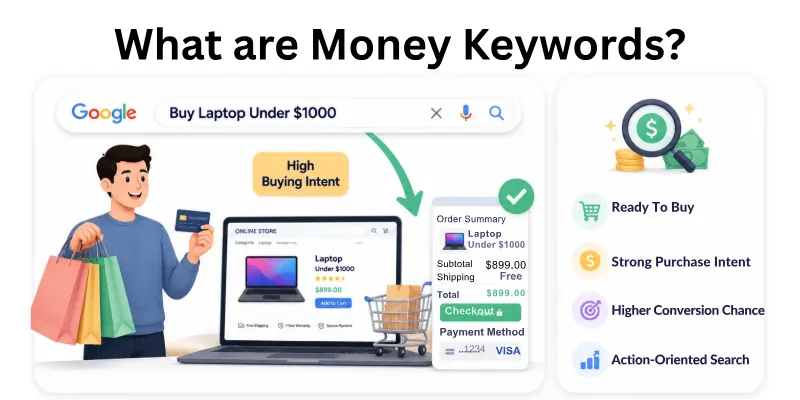
For example, instead of searching “best laptops,” a user searching “buy laptop under $1000” or “best laptop deals online” is using money keywords, because they are ready to purchase.
Types of Money Keywords
Guys, as you have covered the definition, now let me tell you that there are different types of money keywords:
- Buyer Keywords: These are keywords where the user is ready to purchase something right now. They usually include words like buy, order, purchase. Example: buy iPhone 15 online
- Product Keywords: These keywords focus on a specific product or item. The user already knows what they want and is searching for it. Example: Samsung Galaxy S24 price
- Comparison Keywords: These are used when users are comparing two or more products before making a final decision. Example: iPhone 15 vs Samsung S24
- Review Keywords: Users search these keywords to check opinions, ratings, or recommendations before buying. Example: best laptops for students 2026
- Discount / Deal Keywords: These keywords show users are looking for offers, discounts, or cheaper options. Example: laptop discount deals online
Why Money Keywords Are Important
Money keywords are very important to target because:
- High Conversion Rate: These keywords bring users who are ready to take action, so chances of sales or clicks are much higher.
- Better ROI: When you target money keywords, you get more value from your traffic, especially in ads and affiliate marketing.
- Increase in Sales: These keywords directly connect you with buyers, which helps in boosting your product or service sales.
- Targeted Audience: You attract people who already have interest and intent, so you don’t waste traffic on random users.
- Strong Buying Intent: Users searching these keywords are already close to making a decision, which makes them more valuable.
- Useful for Ads (PPC): Money keywords perform very well in paid ads because they bring quick results and conversions.
- Supports Affiliate Marketing: If you are doing affiliate marketing, these keywords help you earn commissions faster.
- Improves Business Growth: More conversions and sales mean better growth for your website or business.
Money Keywords vs Informational Keywords
Many people get confused between money keywords and informational keywords. As I cleared above this in some ways, but here is the clear difference between both:
- Purpose: Money keywords are used when a user wants to buy or take action, while informational keywords are used when someone just wants to learn something.
- User Intent: Money keywords show strong buying intent, but informational keywords show learning or research intent.
- Conversion Rate: Money keywords have high conversion because users are ready to act, whereas informational keywords have low conversion as users are only gathering information.
- Examples: Money keywords: buy shoes online, best laptop deals
Informational keywords: how to choose shoes, what is a laptop - Content Type: Money keywords are used in product pages, landing pages, and ads, while informational keywords are used in blog posts, guides, and tutorials.
- Traffic vs Sales: Informational keywords bring more traffic, but money keywords bring more sales and revenue.
How to Find Money Keywords
Finding money keywords is not that difficult if you know where to look. You just need to focus on keywords that show buying intent instead of just traffic.
Below are some simple and effective ways to find them:
- Google Search Suggestions: Type your main keyword in Google and look at auto-suggestions. You will often see words like buy, best, cheap, deal which are strong money keywords.
- Google “People Also Ask” Section: Check this section to find related queries that sometimes include buying intent and decision-based searches.
- Competitor Analysis: Analyze what keywords your competitors are ranking for, especially their product pages and affiliate content.
- Keyword Research Tools: Use tools like Ahrefs, SEMrush, or Ubersuggest to find keywords with commercial or transactional intent.
- Amazon & eCommerce Sites: Search products on Amazon or other marketplaces to see what people are actually searching before buying.
- Google Ads Data: Check keywords used in ads because most advertisers target money keywords for conversions.
- Add Buying Words Manually: Take a basic keyword and add terms like buy, best, review, discount, cheap, deal to create money keywords.
- Check Product Reviews & Forums: Look at what people are asking before buying in reviews or forums. These queries often turn into money keywords.
- Use Long-Tail Keywords: Focus on longer phrases like “best budget laptop for students” because they usually have higher buying intent.
Where to Use Money Keywords
Money keywords work best when you place them where users are ready to take action. Here are the main places where you should use them:
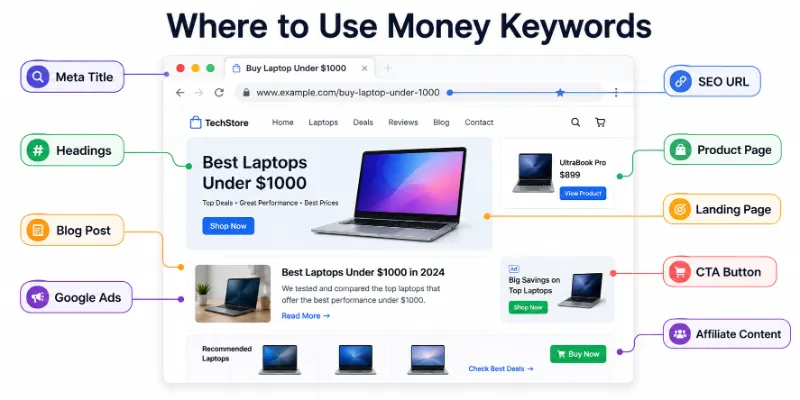
- Product Pages: Use money keywords on product pages to target users who are ready to buy and looking for specific items.
- Landing Pages: These pages are designed for conversions, so adding money keywords helps in getting more sales or leads.
- Blog Posts (Buyer Intent Content): Use them in articles like reviews, comparisons, and “best” lists to attract ready-to-buy users.
- Meta Title & Description: Adding money keywords here helps improve click-through rate from search results.
- Headings (H1, H2): Using them in headings makes your content more relevant for search engines and users.
- URL Structure: Include money keywords in URLs to make your page more SEO-friendly and clear.
- Call to Action (CTA): Use them in buttons or CTAs like “Buy Now” or “Get Best Deal” to increase conversions.
- Google Ads / PPC Campaigns: Money keywords perform very well in ads because they target users who are ready to take action quickly.
- Affiliate Content: If you are promoting products, money keywords help you get more clicks and commissions.
Best Practices to Use Money-Making Keywords
Using money making keywords the right way is very important if you want results. Just adding them randomly will not help, you need a proper approach:
- Focus on User Intent: Always understand what the user wants before using the keyword. If the intent is to buy, your content should match that.
- Use in Important Places: Add keywords in title, headings, URL, and meta description so search engines can easily understand your page.
- Avoid Keyword Stuffing: Do not repeat the same keyword again and again, keep it natural and easy to read.
- Use Long-Tail Variations: Instead of only short keywords, use longer phrases that are more specific and easier to rank.
- Create Conversion-Focused Content: Write content like reviews, comparisons, and “best” lists that actually help users make decisions.
- Add Strong CTA (Call to Action): Guide users to take action with lines like buy now, check price, or get the deal.
- Optimize for Mobile Users: Many buyers come from mobile, so your content and pages should load fast and look clean.
- Mix with Informational Content: Don’t rely only on money keywords, combine them with helpful content to build trust.
- Keep Updating Content: Prices, deals, and products change, so update your content regularly to stay relevant.
Common Mistakes to Avoid
Many people use money keywords in the wrong way, which stops them from getting results. Here are some common mistakes you should avoid:
- Targeting Only High Competition Keywords: Going after very competitive keywords makes it hard to rank, especially for new websites.
- Ignoring Search Intent: If your content does not match what the user wants, you won’t get conversions even if you rank.
- Keyword Stuffing: Repeating the same keyword again and again makes content look spammy and affects rankings.
- Not Optimizing Landing Pages: Bringing traffic is useless if your page is not designed to convert visitors into buyers.
- Using Wrong Content Type: Money keywords need review, comparison, or product-based content, not just general information.
- Ignoring Long-Tail Keywords: Focusing only on short keywords means missing easier and more targeted opportunities.
- No Clear Call to Action: If you don’t guide users on what to do next, they may leave without taking action.
- Not Updating Content: Outdated prices, products, or deals reduce trust and conversions.
Money Keywords for Different Platforms
Money keywords work differently depending on the platform you are using. Here is how you can use them in the right way:
- Blogging: In blogging, money keywords are used in review articles, “best of” lists, and comparison posts to attract readers who are ready to buy.
- Affiliate Marketing: Affiliate marketers use money keywords to target users who are close to purchasing so they can earn commissions from conversions.
- E-commerce Websites: Online stores use these keywords on product pages to bring customers who are searching with buying intent.
- Google Ads (PPC): In paid ads, money keywords are used to get quick clicks and conversions because they target ready-to-buy users.
- YouTube Content: Video titles and descriptions use money keywords in product reviews and comparisons to attract viewers who want buying advice.
- Landing Pages: Businesses use money keywords on landing pages to convert visitors into leads or customers quickly.
- Social Media Ads: Platforms like Facebook and Instagram use money keywords in ad copy to reach people interested in making a purchase.
Tools for Finding Money Keywords
Finding money keywords becomes much easier when you use the right tools. These tools help you discover keywords with buying intent, search volume, and competition data.
Here are the best tools you can use:
- Google Keyword Planner: This is a free tool by Google that shows keyword ideas, search volume, and competition. It is very useful for finding commercial and money keywords.
- Ahrefs: A powerful SEO tool that helps you find high-intent keywords, competitor keywords, and keyword difficulty so you can target profitable terms.
- SEMrush: This tool gives detailed keyword data like search intent, CPC, volume, and competition, which helps in finding strong money keywords.
- Ubersuggest: A beginner-friendly tool that provides keyword ideas, SEO difficulty, and content suggestions for money-making keywords.
- AnswerThePublic: This tool shows real questions people are searching for, which often includes buying-related queries and long-tail money keywords.
- Google Autocomplete (Search Suggestions): When you type a keyword in Google, it suggests popular searches like “buy,” “best,” or “cheap,” which are often money keywords.
- Google Trends: Helps you see rising search topics and compare keyword popularity, which can help identify profitable opportunities.
- Competitor Analysis Tools: Tools like Ahrefs or SEMrush also let you check what keywords your competitors are ranking for, helping you find money keywords easily.
Final Thoughts
So everyone, it’s time to say goodbye. I hope now your confusion about what are money keywords in SEO is completely cleared up in a simple way.
Before ending, my personal recommendation is this: don’t just focus on finding money keywords, focus on understanding user intent behind them. If you match the right keyword with the right content and solve the user’s problem, conversions will come naturally. Always try to balance money keywords with helpful informational content so your website looks trustworthy and not just sales-focused.
And yes, if you found this guide helpful, make sure to explore our more SEO and blogging guides to learn step by step. Also, don’t miss our blogging course where we teach how to find keywords, write content, and actually earn from your blog in a practical way.
FAQs
Here are some of the most frequently asked questions related to what are money making keywords in SEO:
Money keywords are search terms that show strong buying intent from users. These keywords are used when people are ready to purchase a product or service instead of just learning about it. For example, keywords like “buy laptop online” or “best laptop deals” are money keywords. They are very important because they directly help in conversions and sales.
Money keywords are important because they bring users who are already ready to take action. This means higher chances of sales, leads, or sign-ups. Businesses and bloggers use them to earn money through SEO and affiliate marketing. Without them, it becomes harder to generate revenue from traffic.
Yes, in most cases money keywords and buyer keywords are used for the same purpose. Both refer to search terms that show purchase intent. Users searching these keywords are usually close to making a decision. That is why they are also called make money keywords in SEO.
Money keywords help SEO by attracting high-intent traffic to your website. This traffic is more likely to convert into customers or leads. They improve ROI because fewer visitors are needed to generate results. Overall, they make SEO more profitable and goal-focused.
Money keywords are divided into different types based on user intent.
- Buyer keywords: ready to purchase
- Product keywords: specific product search
- Comparison keywords: comparing products
- Review keywords: checking opinions before buying
- Discount keywords: looking for deals or cheap options
Money keywords should be used in titles, headings, URLs, and meta descriptions. They also work well in product pages and landing pages. Using them in CTAs like “buy now” can increase conversions. Proper placement improves both SEO and sales.
Money keywords mainly bring sales instead of just traffic. The users searching these terms already have buying intent. So even if traffic is lower, conversion rate is much higher. This makes them more valuable than general keywords.
Yes, beginners can rank for money keywords, but they should focus on long-tail keywords first. Long-tail keywords are easier to rank and less competitive. With good content and SEO, beginners can slowly move to competitive keywords. Consistency is very important.
Informational keywords are used when users want to learn something. Money keywords are used when users want to buy something. Informational keywords bring traffic, but money keywords bring conversions. Both are important, but money keywords are more valuable for earning.





- Be Respectful
- Stay Relevant
- Stay Positive
- True Feedback
- Encourage Discussion
- Avoid Spamming
- No Fake News
- Don't Copy-Paste
- No Personal Attacks
- Be Respectful
- Stay Relevant
- Stay Positive
- True Feedback
- Encourage Discussion
- Avoid Spamming
- No Fake News
- Don't Copy-Paste
- No Personal Attacks
