Local SEO vs Global SEO: What’s the Difference & Which One Should You Use?
Published: 20 Jul 2026
Guys, when we talk about SEO, two very important types come up: Local SEO and Global SEO. Local SEO focuses on reaching people in a specific city or area, while global SEO targets users from all over the world. Many people get confused about which one to use for their business and how both actually work.
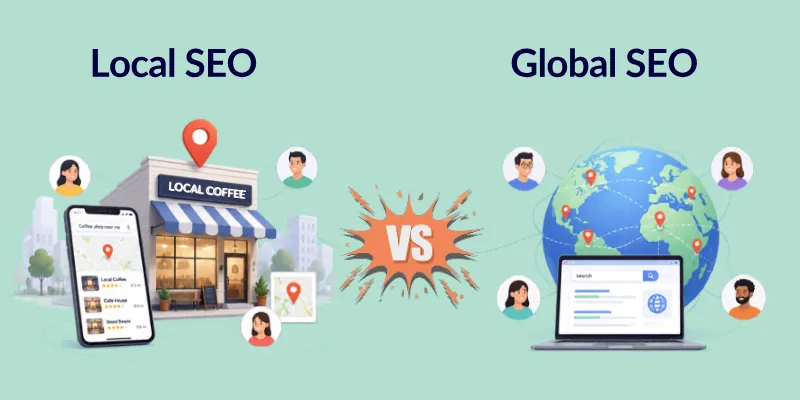
So in this guide, I will explain the difference between local vs global SEO in a very simple way so you can choose the right strategy for your website or business.
Let’s dive in with me!
Local vs Global SEO: Key Differences
Guys, here I am listing the factors in which I will make you clear the difference between both local SEO and global SEO. Well, global SEO is also randomly written as simple SEO (just for your information), okay.
So here are the factors listed:
- Target Audience
- Keyword Type
- Search Reach
- Competition Level
- Traffic Type
- Business Purpose
- Conversion Rate
- Content Strategy
- Ranking Difficulty
- Brand Visibility
Let me guide you now on the difference with great detail so you can clearly understand how both work in real SEO practice.
1. Target Audience
Target audience means the group of people you want to show your website or content to. It explains who will read your content or buy your service. In SEO, this is very important because every business has a different audience. Some businesses only want local people, while some want people from all over the world. Understanding your audience helps you create better content. It also improves your chances of getting the right visitors.
Difference: Local SEO targets nearby people, while global SEO targets worldwide audience.
Local SEO:
- Focuses on people in a specific city or area
- Example: “restaurant in Multan”
- Attracts local customers only
- Best for physical businesses
Global SEO:
- Targets users from all over the world
- Example: “best travel tips”
- No location limit
- Best for online businesses
2. Keyword Type
Keyword type means what kind of words people use when searching on Google. Some keywords include location names, while others are general. This helps Google understand what the user is looking for. Choosing the right keyword type is important for ranking. It also affects the type of traffic you get. This factor helps shape your SEO strategy.
Difference: Local SEO uses location-based keywords, while global SEO uses general keywords.
Local SEO:
- Includes city or area names
- Example: “dentist in Lahore”
- Very specific searches
- Focused on nearby services
Global SEO:
- No location words
- Example: “best dentist tips”
- Broad and general keywords
- Global search targeting
3. Search Reach
Search reach means how far your content can be seen on the internet. It shows whether your website is limited to one area or available worldwide. This factor helps you understand your audience size. It also affects your traffic potential. A wider reach means more visibility. But it also depends on your SEO strategy.
Difference: Local SEO has limited reach, while global SEO has worldwide reach.
Local SEO:
- Limited to one city or region
- Smaller audience size
- Focus on nearby users
- Local map and listings matter
Global SEO:
- Covers international audience
- Very large reach
- No location restrictions
- Focus on global rankings
4. Competition Level
Competition level means how many websites are trying to rank for the same keyword. Some keywords are easy because fewer people use them, while others are very hard. This affects your ranking speed. High competition means more effort is needed. Low competition is easier for beginners. This is a key factor in SEO planning.
Difference: Local SEO has lower competition, while global SEO has higher competition.
Local SEO:
- Less competition in local area
- Easier to rank on Google
- Good for small businesses
- Faster results
Global SEO:
- Very high competition
- Competes with big websites
- Harder to rank
- Needs strong SEO strategy
5. Traffic Type
Traffic type means the kind of visitors coming to your website. Some visitors are nearby and ready to buy, while others are from different countries. This affects your conversion rate. Local traffic is more targeted, while global traffic is more broad. Both types are useful depending on your goal. It helps you understand user behavior.
Difference: Local SEO brings local traffic, while global SEO brings international traffic.
Local SEO:
- Nearby users only
- High buying intent
- Better conversion chances
- More physical visits or calls
Global SEO:
- International users
- Mixed buying intent
- Large audience base
- Mostly online engagement
6. Business Purpose
Business purpose means the main goal behind using SEO for a website. Every business has a different aim, like selling products, getting leads, or building awareness. This factor helps decide what type of SEO strategy you should follow. It also affects the type of audience you target. Understanding purpose makes your SEO more focused. It guides your overall marketing direction.

Difference: Local SEO focuses on physical business goals, while global SEO focuses on online or worldwide goals.
Local SEO:
- Attracts nearby customers
- Focus on shops, services, restaurants
- Example: local bakery or clinic
- Goal is physical visits or calls
Global SEO:
- Focuses on online audience
- Works for blogs, websites, eCommerce
- Example: tech blog or online store
- Goal is global reach and sales
7. Conversion Rate
Conversion rate means how many visitors take action on your website. Action can be buying, calling, or signing up. This factor is very important in SEO success. Higher conversion means better results. It depends on user intent and targeting. Good SEO always improves conversion rate.
Difference: Local SEO usually has higher conversion rate, while global SEO has lower but broader conversions.
Local SEO:
- High chance of conversion
- Users are ready to buy or visit
- Example: booking a local service
- Strong purchase intent
Global SEO:
- Lower but wider conversions
- Mixed user intent
- Example: online reading or shopping
- Depends on audience trust
8. Content Strategy
Content strategy means how you plan and create content for SEO. It depends on your target audience and keyword type. Some content is location-based, while some is general and informative. This factor helps improve ranking and engagement. A good strategy brings more traffic. It also builds authority over time.
Difference: Local SEO uses location-focused content, while global SEO uses broad informational content.
Local SEO:
- Content includes city or area names
- Focus on services in local region
- Example: “best dentist in Multan”
- Includes maps and local info
Global SEO:
- General and informational content
- No location focus
- Example: “how to improve SEO”
- Focus on guides and blogs
9. Ranking Difficulty
Ranking difficulty means how hard it is to appear on the first page of Google. Some keywords are easy to rank, while others need strong effort. This depends on competition and search volume. High difficulty means more time and SEO work. Low difficulty is easier for beginners. It helps in planning SEO strategy.
Difference: Local SEO is easier to rank, while global SEO is harder to rank.
Local SEO:
- Easier ranking in local area
- Less competition
- Faster results
- Good for small businesses
Global SEO:
- Very hard to rank
- High competition worldwide
- Needs strong backlinks and SEO
- Takes more time
10. Brand Visibility
Brand visibility means how many people can see and recognize your brand online. It shows how strong your presence is in search results. Better visibility means more trust and traffic. SEO plays a big role in improving it. This factor helps build long-term brand value. It also affects user trust.
Difference: Local SEO improves local visibility, while global SEO improves worldwide visibility.
Local SEO:
- Visible in local searches and maps
- Strong in nearby area
- Builds local trust
- Good for physical businesses
Global SEO:
- Visible worldwide
- Reaches international audience
- Builds global brand identity
- Best for online businesses
How to Choose Between Local and Global SEO for Your Business
Guys, choosing between local SEO and global SEO depends on your business type, goals, and audience. If you pick the wrong one, you may waste time and not get the results you want.
So it’s very important to understand what your business really needs before starting SEO. This section will help you make the right choice in a simple way.
- If you have a physical shop or service, go for local SEO
- If you sell products or services online worldwide, go for global SEO
- If your customers are in one city or country, choose local SEO
- If you want international reach and traffic, choose global SEO
- If you want quick local customers, focus on local SEO
- If you want long-term brand growth online, focus on global SEO
- If competition is high globally, start with local SEO first
- If your business has no location limit, build global SEO strategy
Common Mistakes to Avoid in Local and Global SEO
Guys, many people make simple mistakes in SEO that stop their website from growing. These mistakes can reduce traffic, rankings, and even conversions. If you avoid them early, your SEO results become much better.
Here are the most common mistakes you should stay away from:
- Using global keywords for a local business
- Ignoring location-based keywords in local SEO
- Not optimizing Google Business Profile for local SEO
- Targeting too broad keywords with no strategy
- Not researching audience before choosing SEO type
- Ignoring mobile users in both local and global SEO
- Using the same content for all locations without changes
- Not tracking performance and keyword results
- Focusing only on traffic, not conversions
- Choosing wrong SEO type for business goals
Final Thoughts
So guys, in this guide you have covered the differences between local SEO vs global SEO in great detail. Now you clearly understand how both work, when to use them, and what mistakes to avoid.
My recommendation is this: always choose your SEO strategy based on your business type and audience. If you are targeting nearby customers, focus on local SEO. But if you want to reach people worldwide, go with global SEO. And the best approach is to balance both when your business allows it, so you can get stable and long-term results.
If you still have questions, don’t miss the FAQs section below; it will help you clear even more confusion and improve your understanding.
FAQs
Here are some of the most frequently asked questions related to the difference between local and global seo:
Local SEO vs global SEO in digital marketing means choosing between targeting nearby customers or worldwide users. Local SEO helps businesses appear in city-based searches and Google Maps. Global SEO focuses on ranking websites for international audiences. Both strategies help increase visibility but in different markets.
Google treats local SEO and general SEO differently based on search intent and location. Local SEO shows map results and nearby businesses. Regular SEO shows website results without location focus. Google uses location signals to decide local rankings.
For beginners, SEO means optimizing a website for all users globally. Local SEO means optimizing for users in a specific area or city. Local SEO uses location-based keywords and listings. SEO is broader and not location-specific.
Local SEO brings traffic from nearby customers who are ready to buy. SEO brings traffic from a wider audience around the world. Local traffic is more targeted and often converts faster. SEO traffic is larger but less location-focused.
Local SEO is best for businesses like restaurants, salons, and local shops. Global SEO is best for blogs, online stores, and digital services. Local SEO helps physical businesses grow locally. Global SEO helps online businesses reach international users.
In local SEO, keywords include city or area names. In global SEO, keywords are general and not location-based. Local keywords focus on “near me” searches. Global keywords focus on general search intent.
Local SEO vs global SEO matters because ranking depends on target audience. Local SEO helps you rank in a specific region. Global SEO helps you compete worldwide. Choosing the right one improves ranking results.
Local SEO shows map listings, business details, and nearby results. SEO shows normal website listings without maps. Local results are based on user location. SEO results are based on content relevance.
Yes, a website can change strategy based on business goals. A local business can expand globally later. Or a global website can target local audiences. SEO strategy can evolve over time.
Both are important but depend on your goal. Local SEO gives fast local customers and conversions. Global SEO gives long-term global reach. The best growth comes when you use the right strategy for your business type.