What Is Digital Marketing & How Does It Work? Explained Simply
Published: 21 Aug 2026
Are you confused about what is digital marketing and why everyone is talking about it today? You might think it’s just about posting on social media or running ads, but it’s much more than that.
Digital marketing is a complete strategy that helps businesses connect with people online, build trust, and grow faster. In today’s world, where almost everything happens on the internet, understanding digital marketing is not just useful; it’s essential.
So, guys, in this guide we will cover what is digital marketing and how it works with great detail.
So let’s dive in!
What is Digital Marketing?
Digital marketing is the process of promoting products, services, or brands using the internet and digital platforms. It includes all online marketing activities such as search engines, social media, websites, email, and mobile apps.
Businesses use digital marketing to reach their audience, attract potential customers, and increase sales. In simple words, digital marketing means showing your business to people when they are online.
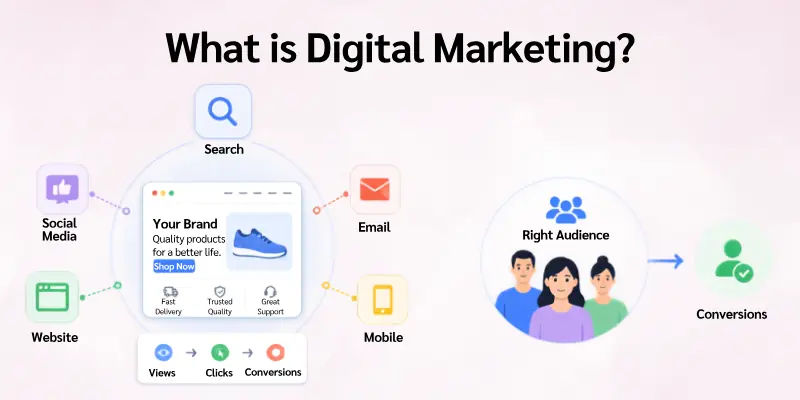
Whether someone is searching on Google, watching videos, or scrolling social media, digital marketing helps you appear in front of them at the right time. It focuses on targeting the right audience instead of reaching everyone randomly.
Another important thing to understand is that digital marketing is measurable. Unlike traditional marketing, you can track how many people saw your content, clicked on it, and converted into customers. This makes it more effective and result-driven.
Why is Digital Marketing Important?
Digital marketing has become a must for businesses in today’s competitive world. People spend a lot of time online, and businesses need to reach them where they are active.
- It allows you to reach a global audience without any location limits
- It is more affordable compared to traditional marketing methods
- You can target specific audiences based on interests, behavior, and location
- It provides real-time results and performance tracking
- It helps build direct relationships with customers
From my experience, digital marketing gives small businesses a fair chance to grow. Even with a small budget, you can compete with bigger brands if your strategy is strong.
How Digital Marketing Works
Digital marketing works step by step, and once you understand the process, it becomes much easier to apply.
- First, you identify your target audience. You need to know who your ideal customers are, what they need, and where they spend time online.
- Second, you create valuable content or ads that solve their problems or answer their questions. This can be blog posts, videos, social media posts, or ads.
- Third, you promote your content using different channels like search engines, social media, or email. This helps you reach more people.
- Fourth, when users interact with your content, you guide them to take action. This action can be signing up, contacting you, or making a purchase.
Finally, you analyze the results and improve your strategy. Digital marketing is all about testing, learning, and optimizing over time.
Types of Digital Marketing
Digital marketing includes different strategies that work together to grow your business:
- Search Engine Optimization (SEO): SEO is the process of improving your website to rank higher in search engine results. It brings organic traffic without paying for ads. It focuses on keywords, content quality, and technical improvements.
- Search Engine Marketing (SEM): SEM involves paid ads on search engines. You bid on keywords and pay when someone clicks your ad. It gives quick results and instant visibility.
- Social Media Marketing (SMM): SMM uses platforms like Facebook, Instagram, LinkedIn, and TikTok. It helps build brand awareness, engage users, and drive traffic. It is also useful for building relationships with your audience.
- Content Marketing: Content marketing focuses on creating useful and valuable content. This includes blogs, videos, guides, and infographics. It helps attract and educate your audience.
- Email Marketing: Email marketing is used to send messages directly to users. It helps build long-term relationships and promote products or services. It is one of the highest ROI marketing methods.
- Affiliate Marketing: In affiliate marketing, others promote your products and earn a commission for each sale. It helps increase reach without upfront marketing costs.
- Influencer Marketing: Influencer marketing involves working with popular personalities. They promote your brand to their audience, helping you gain trust and visibility.
Key Components of Digital Marketing
To succeed in digital marketing, you need to focus on some core components:
- Content Strategy: Planning what content to create, when to post, and who to target. A strong content strategy keeps your marketing consistent and effective.
- Target Audience: Understanding your audience is very important. Knowing their needs, interests, and behavior helps you create better campaigns.
- Marketing Channels: Choosing the right platforms like search engines, social media, or email. Not every channel works for every business.
- Analytics & Data: Tracking performance helps you understand what is working and what is not. This allows you to improve your strategy.
- Conversion Strategy: Turning visitors into customers is the main goal. This includes using strong calls-to-action and optimized landing pages.
Advantages and Disadvantages of Digital Marketing
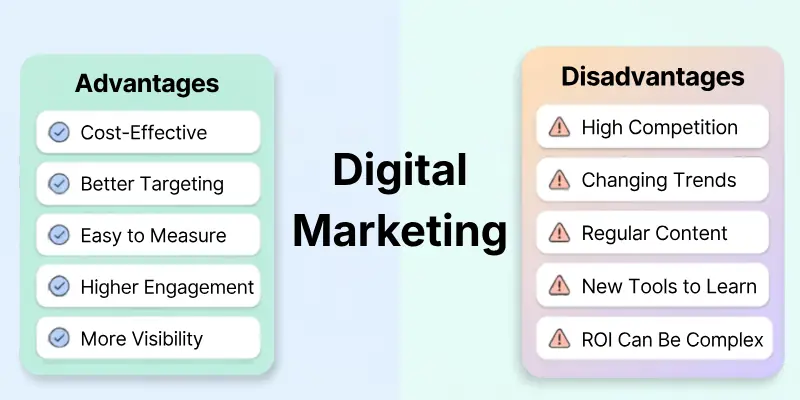
Here are the major pros and cons of digital marketing:
Benefits of Digital Marketing
Digital marketing offers many benefits that make it powerful:
- Cost-effective compared to traditional marketing
- Better audience targeting and personalization
- Easy to track and measure performance
- Higher engagement and interaction
- Increased brand visibility and awareness
It gives you control over your campaigns and allows you to adjust your strategy anytime based on results.
Challenges of Digital Marketing
Even though digital marketing is effective, it comes with challenges:
- High competition in almost every industry
- Constant changes in algorithms and trends
- Need for regular content creation
- Learning new tools and technologies
- Measuring ROI can sometimes be complex
The key is to stay updated and keep learning.
How to Get Started with Digital Marketing
If you are new to digital marketing, follow these simple steps to build a strong foundation and start growing your online presence:
- Define your goals – Clearly decide what you want to achieve, whether it is increasing website traffic, generating leads, improving brand awareness, or boosting sales.
- Identify your target audience – Understand who your ideal customers are, including their needs, interests, problems, and online behavior.
- Build a website or online presence – Create a professional website and establish your brand presence on platforms where your audience spends their time.
- Choose the right marketing channels – Select suitable digital marketing channels such as SEO, social media, email marketing, content marketing, or paid advertising based on your business goals.
- Start creating valuable content – Publish helpful and engaging content that solves your audience’s problems and builds trust with potential customers.
- Track results and improve regularly – Monitor your performance using analytics tools, measure your results, and continuously optimize your strategies for better outcomes.
Start small by focusing on one or two digital marketing strategies that match your goals. As you gain experience and understand what works best, gradually expand your efforts to reach a larger audience and achieve better results.
Future of Digital Marketing
The future of digital marketing is evolving fast with new technologies. AI tools are making it easier to create content and analyze data. Personalization is becoming more important, as users expect relevant content.
Video content, voice search, and automation are growing trends. Businesses that adapt to these changes and focus on user experience will succeed in the long run.
Conclusion
In this guide, we have covered what is digital marketing in great detail. You now understand how it works, its types, benefits, and how you can start your journey.
From my experience, I always recommend starting simple. Focus on learning one strategy, practice consistently, and improve step by step. Digital marketing is not difficult, but it requires patience and continuous learning.
FAQs
Here are the most commonly asked questions related to what is digital marketing:
Digital marketing is promoting products or services online. It uses platforms like search engines, social media, and email. It helps businesses reach more people easily.
Measurement and cost-effectiveness are two benefits of digital marketing. This enables more accurate targeting as well as quicker results. Nevertheless, we can use both of them together.
Digital marketing is something that can be easily learned by beginners. The internet provides access to a wealth of free resources. Over time, improvements can be made through practice.
It is dependent on the approach that you take. While search engine optimization (SEO) takes time, advertisements produce results quickly. A key component is consistency.
Yes, it is a field that is in high demand. A great number of companies require digital marketers. It presents opportunities for growth and earning that are favorable.