What are Backlinks in SEO? Definition, Importance & Types
Published: 18 Feb 2026
Last year, a small website doubled its traffic within six months. The owner did not redesign the site. She did not increase her posting frequency. She focused on earning high-quality backlinks from relevant websites.
That brings us to an important question: what are backlinks? Backlinks are links from other websites that lead to your site. They help search engines measure trust and credibility. When reliable sites link to you, your rankings improve and your traffic grows.
Let us cover all in detail.
What are Backlinks?
Backlinks, also known as inbound links or incoming links, are links from one website to another. They are a signal to search engines that the linking website trusts and endorses the linked-to website. Backlinks are important for SEO because they’re seen as a signal of quality and authority. The more backlinks a website has, the higher it’s likely to rank in search results.
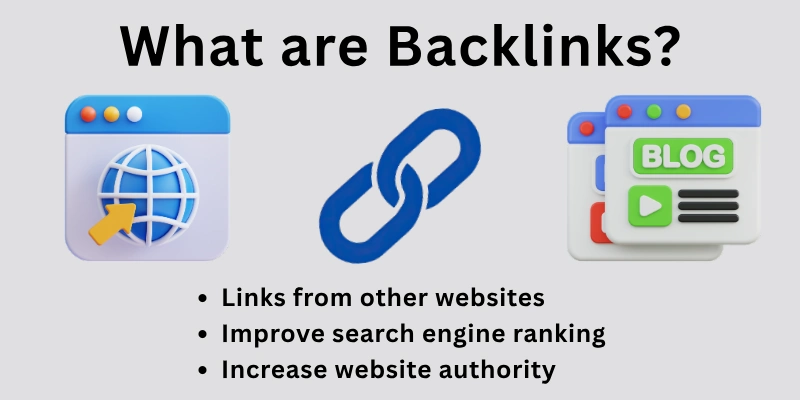
Let me clarify this concept with an example:
Imagine you’re a new restaurant in town. You want to get people to come to your restaurant, so you put up flyers all over town. You also ask your friends and family to tell their friends and family about your restaurant.
In the world of SEO, the flyers you put up all over town are like backlinks from other websites. And the word-of-mouth marketing you’re doing is like backlinks from your friends and family.
The more backlinks you have, the more people are likely to know about your restaurant. And the more people who know about your restaurant, the more people are likely to come.
The same is true for websites. The more backlinks you have, the more popular and authoritative your website is considered to be. And the more popular and authoritative your website is, the higher it’s likely to rank in search results.
Of course, not all backlinks are created equal.
A backlink from a high-quality website is more valuable than a backlink from a low-quality website. That’s why it’s important to focus on getting backlinks from other reputable websites in your industry.
Here, you guys do not need to be worried, because in the next section, I am going to guide you on how you guys can create a high-quality backlink for your website.
Why are Backlinks Important?
Backlinks are the most important factor in ranking for search engines. Other websites trust and recognize them, and search engines use them to determine whether your site is a good source of information.
When a website connects to yours, it is essentially suggesting that your content is excellent enough to be suggested to the viewers of its own site. This is a strong recommendation, and it is one of the key reasons why backlinks are so crucial for site ranking.
Backlinks can assist you not just in ranking higher in search results, but also in:
- Drive more traffic to your website
- Increase your brand awareness
- Generate more leads and sales
Overall, backlinks are essential for any website that wants to succeed online.
What’s Backlink Authority & How Is It Determined?
The backlink authority of a website indicates the quality and relevance of its backlinks. Determining its ranking in search engine results pages (SERPs) is heavily reliant on this factor.
Google uses a variety of factors to determine backlink authority, including:
- The number of backlinks: A website with more backlinks is deemed more authoritative. Be aware that not all backlinks are equal. A high-quality, relevant backlink is worth more than a low-quality, irrelevant one.
- The quality of the linking websites: The authority of a website’s backlinks depends on its linked websites. High-authority backlinks are more important than low-authority ones.
- The anchor text of the backlinks: The anchor text of a backlink is the text that is used to link to a website. Google employs anchor text to determine link context and website relevance. Backlinks with relevant anchor text are more valuable than generic ones.
Here is an example for clearance:
Website A:
10 backlinks from high-quality, relevant websites
Website B:
100 backlinks from low-quality, irrelevant websites
Which website has higher backlink authority?
- Website A, because it has backlinks from fewer but higher-quality websites.
I think now you get the point! Let’s move on.
Types of Backlinks
Are there different types of backlinks? Yes, there are different types of backlinks, and each one plays a different role in SEO. Some help your rankings directly, while others support traffic, branding, or visibility. Below, I explain each type:
- Dofollow Backlinks
- Nofollow Backlinks
- Sponsored Backlinks
- UGC Backlinks
- Editorial Backlinks
- Guest Post Backlinks
- Forum Backlinks
- Blog Comment Backlinks
- Directory Backlinks
- Social Media Backlinks
- Web 2.0 Backlinks
- Broken Link Backlinks
- Image Backlinks
- Video Backlinks
- Profile Backlinks
- PBN Backlinks
Let me concisely guide you through each backlink type.
1. Dofollow Backlinks
Dofollow backlinks are the standard type of links. They tell search engines to follow the link and pass authority to the linked website. These links directly help improve rankings. Most SEO experts focus on earning high quality dofollow links because they pass link value.
- Pass authority from one site to another
- Directly impact keyword rankings
- Best when earned from trusted websites
2. Nofollow Backlinks
Nofollow backlinks tell search engines not to pass authority to the linked website. They use a special attribute that blocks link value transfer. These links do not directly boost rankings, but they still drive traffic and build brand trust. A natural backlink profile always includes some nofollow links.
- Do not pass SEO authority
- Often used in comments and ads
- Still useful for traffic and visibility
3. Sponsored Backlinks
Sponsored backlinks are paid links. Website owners add them when someone pays for placement. Search engines require these links to carry a sponsored tag. If you misuse them, you risk penalties.
- Used in paid promotions
- Must include proper link attributes
- Should be used carefully and honestly
4. UGC Backlinks
UGC stands for User Generated Content. These backlinks appear in blog comments, forums, or community posts created by users. Most UGC links are nofollow. They help increase brand awareness and engagement.
- Found in comments and forums
- Usually marked as user generated
- Helpful for brand exposure
5. Editorial Backlinks
Editorial backlinks happen naturally when a website links to your content as a reference. The site owner adds the link because your content provides value. These are the most trusted and powerful backlinks. They are difficult to earn but very rewarding.
- Earned naturally through quality content
- Highly trusted by search engines
- Improve authority and credibility
6. Guest Post Backlinks
Guest post backlinks come from articles you write for other websites. You include your link inside the article or author bio. These links help build authority and relationships in your industry. Quality matters more than quantity here.
- Earned by contributing articles
- Great for niche authority
- Builds both links and reputation
7. Forum Backlinks
Forum backlinks come from discussions on online forums. You add your website link when it helps answer a question. If you spam forums, moderators remove your links. When used correctly, they build targeted traffic.
- Found in discussion threads
- Must add value to conversations
- Good for niche traffic
8. Blog Comment Backlinks
Blog comment backlinks come from leaving comments on blog posts. Many of them are nofollow. If your comment adds insight, it can drive visitors to your site. Avoid generic or spammy comments.
- Placed in blog comment sections
- Often nofollow
- Work best with thoughtful replies
9. Directory Backlinks
Directory backlinks come from listing your website in online directories. Many directories provide nofollow links. Relevant and trusted directories can still help with visibility. Low quality directories can harm your site.
- Created through site submissions
- Improve online presence
- Choose niche relevant directories only
10. Social Media Backlinks
Social media backlinks come from platforms like Facebook, LinkedIn, and X. These links usually do not pass SEO authority. They help increase traffic and brand awareness. Strong social sharing improves content reach.
- Drive referral traffic
- Increase content visibility
- Support brand growth
11. Web 2.0 Backlinks
Web 2.0 backlinks come from platforms that allow users to publish content. You create articles or posts and link back to your website. Quality content is important here. Poor content can reduce trust.
- Created on publishing platforms
- Require original content
- Help diversify link profile
12. Broken Link Backlinks
Broken link backlinks come from replacing dead links on other websites with your own link. You find a broken link and suggest your content as a replacement. This method provides value to the site owner. It works well when done professionally.
- Fix dead links on other sites
- Provide helpful replacement content
- Win win strategy for both sides
13. Image Backlinks
Image backlinks happen when someone uses your image and links back to your site as credit. Infographics often earn these links. Optimized images increase your chances of earning them. They also improve visual branding.
- Earned through image credits
- Popular with infographics
- Support visual content marketing
14. Video Backlinks
Video backlinks come from video sharing platforms like YouTube and Vimeo. You add your website link in the description or profile. Videos increase engagement and referral traffic. They also improve brand authority.
- Placed in video descriptions
- Drive targeted viewers
- Boost brand credibility
15. Profile Backlinks
Profile backlinks come from creating accounts on websites and adding your link in the bio section. These links are easy to build. Most of them are nofollow. They help diversify your backlink profile.
- Added in user profiles
- Simple to create
- Good for link diversity
16. PBN Backlinks
PBN backlinks come from private blog networks owned by one person or group. People use them to control link building. Search engines strongly discourage this practice. If detected, your site may face penalties.
- Created from controlled networks
- High risk strategy
- Can cause ranking penalties
How to Get Backlinks: 20+ Best Ways
Here are 23 steps mentioned on how to create high-quality backlinks:
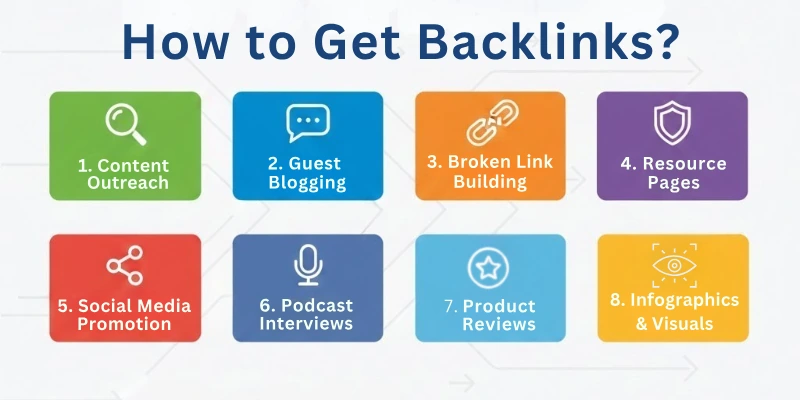
- Create High-Quality Content
- Do Manual Outreach
- Build Long-Term Relationships
- Guest Post on Niche Websites
- Create Visual Content like Infographics
- Fix Broken Links on Other Sites
- Claim Unlinked Brand Mentions
- Reclaim Lost Backlinks
- Create Linkable Resources
- Get Featured in Interviews
- Connect with Journalists
- Use HARO for Media Mentions
- Get Listed in Trusted Directories
- Sponsor Industry Events
- Get Product or Service Reviews
- Use Social Media for Link Promotion
- Participate in Forums
- Leave Value-Based Blog Comments
- Use Social Bookmarking Websites
- Use Trackbacks and Pingbacks
- Submit Website to Search Engines
- Use Link Building Tools
- Monitor and Remove Toxic Links
Let’s start covering each in detail.
1. Create High-Quality Content
High-quality content is the foundation of strong backlinks. When your content solves real problems, people naturally reference and link to it. Focus on depth, clarity, and usefulness instead of writing short general articles. Search engines reward content that provides complete answers. If your content stands out, backlinks follow without begging for them.
- Publish original research or case studies
- Add real examples and step-by-step solutions
- Update old posts with fresh data
2. Do Manual Outreach
Manual outreach means you personally contact website owners and suggest your content. You must send personalized emails instead of copy paste templates. Show them how your content adds value to their readers. Keep your message short and respectful. Strong outreach builds real backlink opportunities.
- Mention their recent article in your email
- Suggest a specific place for your link
- Follow up once if they do not reply
3. Build Long-Term Relationships
Link building works better when you build relationships first. Connect with bloggers and editors in your niche through comments and social media. Support their work before asking for anything. Trust increases the chances of earning natural links. Relationships create ongoing link opportunities.
- Share their content regularly
- Offer help without asking for links
- Stay active in industry discussions
4. Guest Post on Niche Websites
Guest posting allows you to publish content on other relevant websites. In return, you earn a backlink inside the article or author bio. Choose websites related to your industry and audience. Avoid spam blogs that exist only for links. High-quality guest posts build authority and traffic.
- Pitch unique topic ideas
- Follow the website guidelines strictly
- Add value instead of self promotion
5. Create Visual Content
Visual content like infographics and charts attracts attention quickly. Many bloggers prefer linking to visual data because it explains ideas faster. When you create original graphics, others use them and credit your site. This method works well for statistics and tutorials. Strong visuals increase shareability.
- Add your logo inside the image
- Provide ready to copy embed code
- Use clear and simple design
6. Fix Broken Links on Other Sites
Broken link building helps website owners fix dead links. You find a broken link and suggest your content as a replacement. This improves their user experience. In return, you earn a relevant backlink. It is a win win method.
- Scan resource pages in your niche
- Offer better content than the broken page
- Keep your outreach helpful, not pushy
7. Claim Unlinked Brand Mentions
Many websites mention your brand without linking to it. You can contact them and request a backlink politely. Since they already know your brand, success rates are higher. This method is easier than cold outreach. It turns simple mentions into SEO value.
- Set alerts for your brand name
- Reach out within a few days
- Thank them for the mention first
8. Reclaim Lost Backlinks
Sometimes backlinks disappear because pages get removed or URLs change. You should monitor your backlink profile regularly. If you find lost links, contact the website owner to restore them. You can also fix internal errors on your own site. This protects your SEO authority.
- Check lost links monthly
- Fix broken internal pages
- Use proper 301 redirects
9. Create Linkable Resources
Linkable resources attract backlinks naturally because they provide strong value. These include tools, templates, detailed guides, and research reports. When people find your resource helpful, they reference it in their own content. Focus on depth and accuracy. Unique resources earn links for years.
- Create free downloadable templates
- Publish industry statistics
- Build simple free tools
10. Get Featured in Interviews
Interviews help you build authority and backlinks at the same time. Many blogs interview experts and link back to their websites. Share practical insights and real experiences. This builds trust with new audiences. Strong authority leads to more link opportunities.
- Reach out to niche podcasts
- Share case study examples
- Add interview page on your site
11. Connect with Journalists
Journalists often look for expert opinions for their articles. If you provide clear and helpful insights, they may mention and link to your website. Quick responses increase your chances. Professional communication builds credibility. Media backlinks are highly powerful.
- Build a strong author bio page
- Provide data backed answers
- Stay active on professional platforms
12. Use HARO for Media Mentions
HARO connects experts with journalists. You receive daily queries and send short answers. If selected, your quote appears in major publications with a backlink. Consistency improves results. Focus only on relevant topics.
- Respond early to queries
- Keep answers clear and short
- Track published features
13. Get Listed in Trusted Directories
Trusted directories help increase visibility and credibility. Choose directories relevant to your niche or location. Avoid low quality directories created only for spam. Good directories can still drive referral traffic. They also support local SEO.
- Maintain consistent business details
- Choose niche specific directories
- Avoid automated submissions
14. Sponsor Industry Events
Sponsoring events often earns you a backlink from the event website. Conferences and webinars list sponsors publicly. Choose events related to your industry. This builds both brand exposure and authority. It also strengthens networking opportunities.
- Sponsor local niche events
- Request link placement on sponsor page
- Share event recap content
15. Get Product or Service Reviews
When bloggers review your product, they usually link to your website. Reach out to relevant reviewers in your industry. Offer trials or samples if needed. Honest reviews build trust and backlinks. Focus on real value, not fake praise.
- Target niche bloggers
- Encourage detailed feedback
- Highlight reviews on your site
16. Use Social Media for Link Promotion
Social media increases content visibility. While most links are nofollow, they bring traffic and exposure. Higher visibility increases chances of natural backlinks. Share content consistently. Engagement matters more than volume.
- Use strong captions
- Share during peak times
- Encourage discussions
17. Participate in Forums
Forums allow you to answer questions in your niche. Add your link only when it helps explain your answer. Avoid spam behavior. Quality participation builds trust. Relevant traffic often converts well.
- Choose active communities
- Write detailed, helpful answers
- Use your real profile name
18. Leave Value-Based Blog Comments
Blog comments can create visibility and relationships. Your comment must add insight to the discussion. Avoid generic phrases like “nice post”. Some blogs allow website links. Thoughtful comments build credibility.
- Comment on industry blogs
- Add unique perspective
- Stay consistent weekly
19. Use Social Bookmarking Websites
Social bookmarking platforms help distribute your content. Users discover and share useful pages. Although most links are nofollow, they increase exposure. More exposure leads to natural backlinks. Share only strong content.
- Write compelling titles
- Submit evergreen content
- Avoid mass submissions
20. Use Trackbacks and Pingbacks
Trackbacks notify other bloggers when you link to their article. If approved, your link appears on their page. This builds connection between related content. It works best in blogging communities. Use it carefully and manually.
- Link to high quality posts
- Inform bloggers politely
- Avoid automated tools
21. Submit Website to Search Engines
Submitting your website helps search engines index your pages faster. It does not create strong backlinks directly. However, proper indexing improves visibility. Better visibility increases linking opportunities. Always submit updated sitemaps.
- Verify site ownership
- Submit XML sitemap
- Monitor indexing status
22. Use Link Building Tools
Link building tools help you analyze competitor backlinks. They show gaps and opportunities. Tools save time and improve strategic planning. Always review opportunities manually before outreach. Data-driven decisions work better.
- Track competitor link sources
- Monitor new backlink alerts
- Analyze anchor text patterns
23. Monitor and Remove Toxic Links
Not all backlinks help your site. Some spam links can harm rankings. Regular monitoring protects your website. Remove or disavow low quality links carefully. A clean backlink profile supports long-term growth.
- Check spam score regularly
- Review suspicious domains
- Use disavow file carefully
Tips for Building High-Quality Backlinks
Here are some you guys need to follow:
- Prioritize quality above quantity. A small number of excellent backlinks is preferable to a large number of poor backlinks.
- Get backlinks from reputable and relevant websites. More beneficial backlinks come from websites with a high domain authority and relevance to your sector.
- Avoid using black hat link-building strategies. Black hat link-building practices, such as buying backlinks and spamming directories, might get your website penalized by Google.
- Create high-quality content that is worth linking to. People are more inclined to link to your website if it contains excellent and helpful information.
- Keep an eye on your backlink profile on a frequent basis. Track your backlinks with a tool like Google Search Console to uncover any low-quality backlinks.
Google Updates Regarding Backlinks
Here are some Google updates related to backlinks, which show you how valuable high-quality backlinks are for your website.
- Penguin (2012): The Penguin update was designed to target websites that were using black hat link-building techniques, such as buying backlinks and link spamming.
- Panda (2011): The Panda update was designed to target low-quality websites. Backlinks from low-quality websites can now hurt your rankings.
- Hummingbird (2013): The Hummingbird update was a major update to Google’s algorithm that focused on better understanding the context of search queries. This update made it more important to have high-quality backlinks from relevant websites.
- RankBrain (2015): RankBrain is a machine learning algorithm that Google uses to help rank websites. RankBrain considers a number of factors, including backlinks, when ranking websites.
- BERT (2019): BERT is a natural language processing algorithm that Google uses to better understand the context of search queries. This update made it even more important to have high-quality backlinks from relevant websites.
- December 2022 Link Spam Update: This update was designed to better identify and nullify unnatural links, including those on sites that engage in link buying or link building activities.
- October 2023 Core Update: This update was a major update to Google’s algorithm that was designed to improve the quality of search results. Backlinks are still an important ranking factor, but this update made it even more important to have high-quality backlinks from relevant websites.
Conclusion
So guys, it’s time to say goodbye! Let me tell you guys that backlinks are very important for website ranking, but only high-quality and relevant ones. In this guide, I have told you about the ins and outs related to backlinks in SEO and what you guys need to know about them.
But if you still have any questions, then just comment below and I will be helping you. Stay tuned with us to enhance your knowledge even more!
FAQs
Here are some of the most commonly asked questions related to what are backlinks in SEO:
Black hat link-building strategies are unethical and may result in Google penalizing your website. Here are some instances of black hat link-building techniques:
- Buying backlinks
- Link spamming
- Creating link farms
- Using private blog networks (PBNs)
There are a number of tools that you can use to monitor your backlink profile, including:
- Google Search Console
- Ahrefs
- SEMrush
- Majestic
- MozLinkExplorer
Dofollow links pass link juice to the page they link to, which means they help that page rise higher. Even though nofollow links don’t pass link juice, they can still be useful for SEO because they can help bring more people to your website and raise knowledge of your brand.
When you disavowing a link, you tell Google that you don’t want to be linked to that link. This could help you if your backlinks come from spammy or low-quality sites. You can make a delete file and send it to Google Search Console to remove a link.
There is no fixed number of backlinks you need to rank. It depends on your competition and keyword difficulty. In this year, quality matters more than quantity. Focus on earning relevant and trusted backlinks instead of chasing big numbers.
Yes, backlinks are still very important. Google continues to use links as a major ranking signal. Even with AI based updates from Google, authority and trust still matter. Strong backlinks help search engines understand which content deserves higher ranking.
Backlinks do not improve rankings overnight. In most cases, you may see changes within a few weeks to three months. It depends on your site authority and the quality of the backlink. Search engines need time to crawl and process the link. Stay consistent and patient.
No, internal links are not backlinks. Backlinks come from other websites, while internal links connect pages within your own site. Both are important for SEO, but they serve different purposes. Internal links help distribute authority inside your website. Backlinks build authority from outside sources.
Yes, too many low-quality backlinks can harm your website. If you suddenly gain thousands of spam links, search engines may see it as manipulation. A natural and steady growth pattern works best. I always recommend monitoring your backlink profile regularly. Quality and relevance protect your rankings.
The rate at which you are getting new backlinks is called link velocity. A normal link velocity is important, which means you shouldn’t get too many backlinks too quickly. If your backlinks pile up all of a sudden, Google might think that you are using unethical ways to build links.



- Be Respectful
- Stay Relevant
- Stay Positive
- True Feedback
- Encourage Discussion
- Avoid Spamming
- No Fake News
- Don't Copy-Paste
- No Personal Attacks
- Be Respectful
- Stay Relevant
- Stay Positive
- True Feedback
- Encourage Discussion
- Avoid Spamming
- No Fake News
- Don't Copy-Paste
- No Personal Attacks
