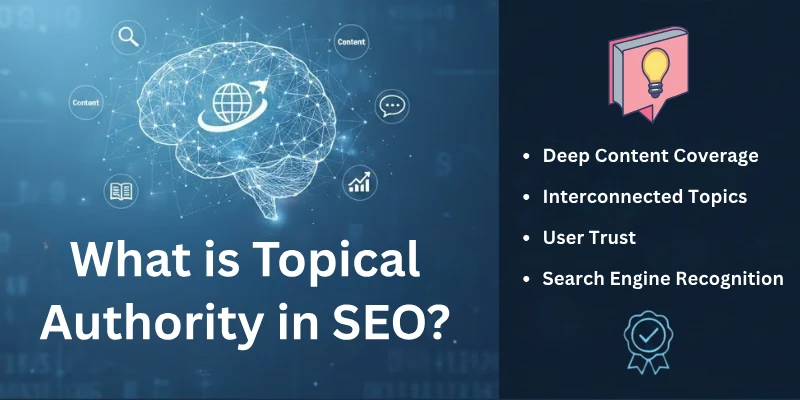
What is Topical Authority in SEO?
Published: 31 Dec 2025
Have you ever wondered why a small website with a low domain authority can sometimes outrank a large and well-established website for a particular keyword?
The answer is often topical authority.
Topical authority is a measure of a website’s perceived expertise and credibility on a specific topic. When a website has strong topical authority on a subject, it’s more likely to rank higher in search results for related keywords, even if it doesn’t have the highest domain authority.
In this article, we’ll explain what is topical authority in SEO, why it’s important, and how to build it for your website. We’ll also provide tips on how to measure your topical authority and track your progress over time.
So guys, without wasting time, let’s dig into the article.
What is Topical Authority in SEO?
Topical authority is a measure of how knowledgeable and trustworthy your website is on a specific topic. In the context of SEO, it’s important because it can help you rank higher in search results for related keywords.
Here’s a simple example:
Imagine you’re a keyboard enthusiast. You’ve been building and using keyboards for years, and you know a lot about the topic. You decide to start a blog to share your knowledge with others.
Over time, you write dozens of blog posts about different types of keyboards, how to build them, and how to choose the right keyboard for your needs. You also start filming YouTube videos and creating social media posts about keyboards.
As a result of your efforts, your website becomes known as a go-to resource for information about keyboards. You have strong topical authority on this topic.
Search engines like Google take topical authority into account when ranking websites in search results. This means that if you have strong topical authority on a particular topic, your website is more likely to rank higher for related keywords, even if your website is newer or has fewer backlinks than your competitors.
Why Topical Authority Is Important in SEO?
In our niche research guide, we have learned one thing mainly: when you are going to start blogging, you must be niche-specified, like your website should cover only one specified keyword, but fully with its complete ins and outs. We should not target different niches on our one specific site.
You know why, at that time, my focus was on just that?
It was due to topical authority. As in SEO, topical authority signals to Google that your website is a trusted and authoritative source of information on a particular topic. When you have topical authority, you are more likely to rank higher in SERPs for keywords related to your topic. This can lead to increased organic traffic, brand awareness, and sales.
How Does Topical Authority Work?
Topical authority is a concept in SEO that revolves around the idea of a website or online source being recognized as an expert or authority in a specific niche or topic. It’s important for websites to establish topical authority in order to rank well in search engine results pages.
Here’s a breakdown of how topical authority works, a brief history of Google’s algorithm updates related to authority from 2011 to 2023, and an explanation of EEAT (Expertise, Authoritativeness, Trustworthiness) and its role in building authority:
Topical Authority Working
Search engines use topical authority to determine which websites are most relevant to a particular search query. When a user searches for a topic, the search engine will look for websites that have high topical authority in that topic. The websites with the highest topical authority will be ranked higher in the search results.
Very Brief history of Google’s Algorithm Updates Related to Authority
Here we go:
- 2011: Google Panda update focuses on content quality and reduces the ranking of low-quality websites.
- 2012: Google Penguin update targets websites with spammy backlinks.
- 2013: Google Hummingbird update improves the search engine’s ability to understand the meaning of search queries.
- 2015: Google RankBrain update introduces machine learning into the ranking algorithm.
- 2017: Google Fred update targets websites with low-quality content and spammy links.
- 2018: Google Medic update focuses on the quality of health and medical content.
- 2019: Google BERT update improves the search engine’s ability to understand natural language.
- 2020: Google Core Web Vitals update focuses on the user experience of websites.
- 2021: Google Page Experience update combines the Core Web Vitals update with other user experience signals.
- 2022: Google Helpful Content Update focuses on rewarding websites with high-quality content that is helpful to users.
These algorithm updates have all played a role in increasing the importance of topical authority in SEO. Google is constantly working to improve its ability to identify and reward websites with high topical authority.
EEAT & It’s Role in Building Authority
EEAT is a concept that Google uses to assess the quality of websites and their content. EEAT stands for:
- Experience: The author must have experience in his specified niche.
- Expertise: The author of the content should be an expert on the topic.
- Authoritativeness: The website should be an authoritative source of information on the topic.
- Trustworthiness: The website should be trustworthy and credible.
Firstly it was the concept of just “EAT” then further it changed into EEAT. Google believes that websites with high EEAT are more likely to provide high-quality content that is helpful to users. As a result, Google gives websites with high EEAT a boost in the search rankings.
Strategies for Building Topical Authority
So guys, I have come up with tips that will help you build topical authority in your selected niche:
- High-Quality Content Creation
- Keyword Research and Optimization
- Content Pillars and Topic Clusters
- Backlink Building
- Guest Blogging
- Social Media Engagement
- Influencer Outreach
- Internal Linking
- User Experience Optimization
- Mobile-Friendly Website
- Technical SEO
- Voice Search Optimization
- Schema Markup
- Page Speed Optimization
- Video Content
- Podcasting
- Long-Form Content
- Local SEO Optimization
- E-E-A-T (Experience, Expertise, Authoritativeness, Trustworthiness)
- Content Updates and Refreshing
- Analytics and Data Analysis
- User Engagement and Interaction
- Brand Building
- Online Reputation Management
- Featured Snippets Optimization
Let’s start covering each point in detail so that you can make your confusion clear.
1. High-Quality Content Creation
Creating high-quality content is the first step to becoming an authority in your niche. Your content should be clear, useful, and easy to read. Make sure it is free from errors and provides real value to your audience. Good content encourages readers to return and share your website.
Quick Tips:
- Use images or charts to make information easier to understand.
- Keep your tone friendly and consistent.
- Focus on solving real problems your audience faces.
2. Keyword Research and Optimization
Keywords help you understand what your audience is searching for online. Use them naturally in titles, headings, and paragraphs, but don’t overuse them. Long-tail keywords can attract more specific visitors. Optimizing your keywords makes your content easier to find on Google.
Quick Tips:
- Check what keywords your competitors rank for.
- Use variations of keywords for natural writing.
- Track keyword performance and update content accordingly.
3. Content Pillars and Topic Clusters
Organize your content into pillars and clusters to show Google your expertise. Pillar pages cover main topics, while cluster pages explore subtopics linked back to the pillar. This keeps readers on your site longer and boosts your SEO.
Quick Tips:
- Focus on the most important topics your audience cares about.
- Regularly add new cluster content to expand pillars.
- Link cluster pages back to the main pillar page.
4. Backlink Building
Getting backlinks from trusted websites shows Google that your site is an authority. Focus on relevant, high-quality sites. Backlinks also bring new visitors and improve your search rankings.
Quick Tips:
- Aim for backlinks from websites with high authority.
- Avoid spammy or low-quality links.
- Build links consistently over time.
5. Guest Blogging
Writing for other websites helps you reach new audiences and get backlinks. Choose websites popular in your field and include a link back to your site. This also builds credibility and positions you as an expert.
Quick Tips:
- Offer unique content that benefits their audience.
- Build relationships with site owners.
- Repurpose guest posts on your site if allowed.
6. Social Media Engagement
Being active on social media helps you connect with your audience. Share your content, reply to comments, and start conversations. Engaged followers are more likely to trust you and share your content.
Quick Tips:
- Post regularly on platforms your audience uses.
- Hold polls, Q&As, or contests to increase engagement.
- Share tips and insights, not just links.
7. Influencer Outreach
Reach out to influencers in your niche to grow your reach. Share their content and engage with them first. If relevant, ask them to check or share your content. This builds credibility and expands your audience.
Quick Tips:
- Build genuine relationships before asking for favors.
- Collaborate on content or projects.
- Personalize your outreach messages.
8. Internal Linking
Linking to your own content helps visitors find more related articles. It also helps Google understand the structure of your site. Good internal linking improves SEO and keeps readers engaged longer.
Quick Tips:
- Link to older posts whenever you create new content.
- Use descriptive anchor text.
- Focus on relevant connections, not overlinking.
9. User Experience Optimization
Your website should be easy to navigate and pleasant to use. Clear menus, readable text, and fast-loading pages are key. A good user experience encourages visitors to stay longer and trust your content.
Quick Tips:
- Simplify menus and navigation.
- Use readable fonts and color schemes.
- Remove distracting pop-ups.
10. Mobile-Friendly Website
Most people browse on mobile devices, so your website must look and work well on them. A mobile-friendly site improves rankings and user experience. Make sure content is easy to read and buttons are easy to tap.
Quick Tips:
- Test your website on different devices.
- Use responsive design for all pages.
- Keep load times fast on mobile.
11. Technical SEO
Technical SEO ensures search engines can read and index your website easily. Fix broken links, organize your structure, and use clean URLs. A technically sound site ranks better and faster.
Quick Tips:
- Use a sitemap and robots.txt file.
- Check for crawl errors regularly.
- Maintain proper heading hierarchy.
12. Voice Search Optimization
More people use voice assistants like Siri or Alexa. Write in a natural, conversational style and answer common questions. Long-tail keywords help your content appear in voice searches.
Quick Tips:
- Focus on question-based keywords.
- Keep sentences short and clear.
- Answer questions directly and simply.
13. Schema Markup
Schema markup helps search engines understand your content better. It can show rich results like stars, FAQs, or event info. Using schema can increase your visibility and clicks.
Quick Tips:
- Start with simple schemas like articles or FAQs.
- Test using Google’s Rich Results tool.
- Update schema whenever content changes.
14. Page Speed Optimization
Fast-loading pages improve both SEO and user experience. Compress images, minimize scripts, and use caching. Slow pages frustrate visitors and increase bounce rates.
Quick Tips:
- Use tools like Google PageSpeed Insights.
- Optimize images without losing quality.
- Remove unnecessary scripts or plugins.
15. Video Content
Videos are engaging and help explain ideas better than text alone. Create tutorials, explainers, or tips videos. Share them on your site and social media to reach more people.
Quick Tips:
- Keep videos short and focused.
- Add captions for accessibility.
- Embed videos in related blog posts.
16. Podcasting
Podcasts allow you to speak directly to your audience and build a personal connection. Share tips, interview experts, or discuss trends. Promote them on your website and social media.
Quick Tips:
- Post episodes consistently.
- Encourage listeners to share and subscribe.
- Turn podcast content into blog posts for SEO.
17. Long-Form Content
Longer articles provide in-depth value to readers. Write detailed guides, tutorials, or case studies. Long-form content attracts more backlinks and performs better in search engines.
Quick Tips:
- Break content into headings for easier reading.
- Add visuals, charts, or videos.
- Keep paragraphs short and simple.
18. Local SEO Optimization
If you run a local business, optimize your site for local searches. Use Google My Business and include location keywords. Local backlinks and content help attract community engagement.
Quick Tips:
- Collect positive local reviews.
- Partner with local blogs or organizations.
- Include local-focused content in posts.
19. E-E-A-T (Experience, Expertise, Authoritativeness, Trustworthiness)
Google favors content that shows real expertise and trust. Demonstrate your knowledge and credentials. Providing accurate and honest information builds credibility and improves rankings.
Quick Tips:
- Include author bios and credentials.
- Use reliable sources and references.
- Avoid misleading or false information.
20. Content Updates and Refreshing
Updating old content keeps it relevant and accurate. Add new facts, stats, or examples. Refreshing content shows Google and readers that your site is active and trustworthy.
Quick Tips:
- Update publishing dates when refreshed.
- Add new visuals or examples.
- Remove outdated or incorrect info.
21. Analytics and Data Analysis
Check your website data to see what content works best. Use tools like Google Analytics to track traffic and engagement.

Make improvements based on these insights to grow authority.
Quick Tips:
- Track which pages get the most visitors.
- Monitor bounce rates and time on page.
- Adjust content based on performance.
22. User Engagement and Interaction
Encourage users to comment, ask questions, or share opinions. Responding quickly builds trust and loyalty. Engaged readers are more likely to return and share your content.
Quick Tips:
- Ask questions at the end of posts.
- Reply to every comment thoughtfully.
- Use polls or surveys to increase participation.
23. Brand Building
A strong brand makes your website recognizable and trusted. Keep logos, colors, and content style consistent. A memorable brand helps you stand out as an expert.
Quick Tips:
- Share your story to connect with your audience.
- Use consistent visuals across platforms.
- Create branded templates for content and social media.
24. Online Reputation Management
Your online reputation affects how people and Google perceive you. Monitor reviews and social mentions. Respond to negative feedback politely and highlight positive experiences.
Quick Tips:
- Set up alerts for brand mentions.
- Encourage satisfied users to leave reviews.
- Build relationships with influencers in your field.
25. Featured Snippets Optimization
Featured snippets appear at the top of Google search results for questions. Structure content clearly with headings, bullet points, and concise answers. Snippets increase visibility and traffic.
Quick Tips:
- Answer questions in 40–60 words.
- Use lists, tables, or numbered steps.
- Focus on clear, simple explanations.
Note: So guys, pay attention to these guidelines to establish topical expertise and differentiate yourself within your particular field.
How to Measure Topical Authority?
There is no one definitive way to measure topical authority, as Google does not provide a public metric for it.
However, there are a number of proxies that SEO professionals use to assess a website’s topical authority, including:
- Ranking for a high number of relevant keywords: It’s possible that Google will trust a website more if it ranks high for a lot of relevant keywords. This is because it shows that the website really knows about the subject and gives people useful information.
- Receiving backlinks from high-quality websites: Backlinks from reputable websites serve as a significant indicator of subject matter expertise. A link from a reputable website to your own signifies that your content is credible and of high quality.
- Having a high domain authority: Domain authority (DA) is a Moz indicator that analyses a website’s overall strength and authority. A high DA score indicates that the website is well-known and trusted by Google.
- Having a high page authority: Page authority (PA) is another Moz indicator that assesses the authority of a single page on a website. A high PA score indicates that the page is SEO-optimized and will likely rank well in search results.
In addition to these proxies, SEO professionals also look at a number of other factors when assessing topical authority, such as the quality and depth of the website’s content, the website’s user experience, and the website’s social media engagement.
Conclusion
So, in this blog post, you learned about topical authority in SEO. Now You have a good understanding of what it is, why it is important, and how to build it.
In a nutshell, topical authority is a measure of your website’s credibility and expertise on a particular subject. The more informative and thorough your content is, the more topical authority you’ll gain. This can result in higher search engine results page (SERP) rankings, more traffic to your website, and more conversions.
FAQs
Here are the most commonly asked questions related to topical authority in SEO:
There are a few ways to tell if you have topical authority:
- Organic search rankings
- Backlinks
- Expert opinions
This question doesn’t have a single answer because it depends on many things, such as how competitive your topic is, how good your content is, and how much work you put into building backlinks. However, it typically takes several months to years to build topical authority on a competitive topic.
Here are a few resources that can help you build topical authority:
- Google Search Console
- Ahrefs
- SEMrush
- Yoast SEO
This question doesn’t have a single answer because it depends on your business, your audience, and your resources. As a general rule, though, you should post at least one new thing every week. If you can post more often, that’s even better.
Content clusters are groups of related content organized around a central topic. They assist search engines in determining the scope of your website’s expertise and ranking your content accordingly.
As your website grows and changes, you need to keep making high-quality content and getting backlinks from other high-quality websites to keep your topical authority. You should also look over your content often and make changes as needed.



- Be Respectful
- Stay Relevant
- Stay Positive
- True Feedback
- Encourage Discussion
- Avoid Spamming
- No Fake News
- Don't Copy-Paste
- No Personal Attacks
- Be Respectful
- Stay Relevant
- Stay Positive
- True Feedback
- Encourage Discussion
- Avoid Spamming
- No Fake News
- Don't Copy-Paste
- No Personal Attacks
