What is Pogo-Sticking in SEO & How to Reduce It?
Published: 26 Nov 2025
Have you ever clicked on a website from a search result only to quickly return and try another one? This common behavior is known as pogo-sticking, and it plays a bigger role in SEO than you might think.
In this article, we’ll explore what pogo-sticking in SEO is, why it’s important for your website’s ranking, and how it can impact SEO.
So, guys, keep reading to find out how this simple action could be affecting your site’s performance in search results!
What is Pogo Sticking in SEO?
Pogo-sticking happens when a person searches for something online, clicks on a link to a website, but quickly comes back to the search page. After coming back, they click on another link to a different website. This is called pogo-sticking because the person jumps from one website to another, just like someone bouncing on a pogo stick.
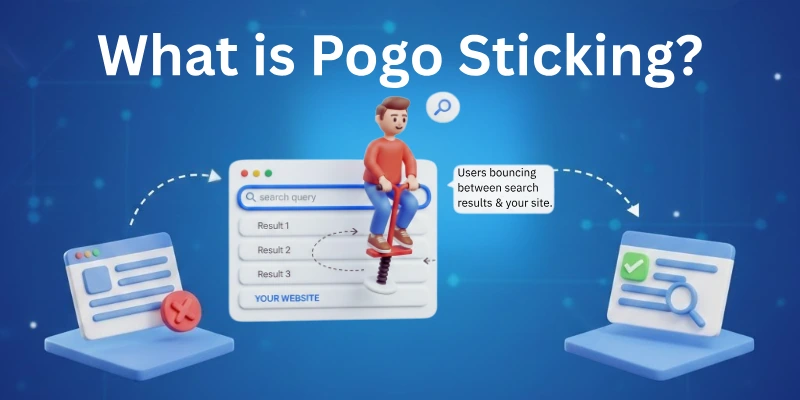
It shows that the first website they clicked on didn’t give them the information they needed or wasn’t helpful.
How Does Pogo-Sticking Impact SEO?
SEO, or search engine optimization, is about making your website rank higher on search engines. If people keep pogo-sticking from your website, Google might think it’s not a good website.
This can hurt your SEO because Google wants to show websites that give users what they need. The more people who leave your website quickly, the more likely Google will rank your site lower, making it harder for others to find.
Pogo-Sticking vs. Bounce Rate
Pogo-sticking and bounce rate are two things that show how people behave on websites, but they’re different.
- Pogo-Sticking: This happens when someone clicks on a search result and goes to a website but quickly returns to the search results to try another website. It shows that the person didn’t find what they were looking for on the first site.
- Bounce Rate: This happens when someone visits a website but doesn’t click on anything else on that site. They may leave the website right away, but they don’t return to the search results. The bounce rate doesn’t always mean the website is bad. Sometimes, people find the answer they need on the first page and leave.
Common Reasons for Pogo-Sticking
There are many reasons why someone might pogo-stick from a website. Here are the most common ones:
- Irrelevant Content: The website doesn’t answer the users’ questions or provide information about what they are looking for.
- Poor User Experience: If the website is slow to load, hard to navigate, or looks messy, people will get frustrated and leave.
- Misleading Titles or Meta Descriptions: Sometimes, a website’s title or description in the search results doesn’t match what’s actually on the page. This can trick people into clicking on the link, but when they find out the content isn’t what they expected, they quickly go back to the search page.
- Too Many Ads or Pop-Ups: If a website has too many ads or pop-ups, it can annoy visitors. People want to find the information they need quickly without being interrupted by lots of ads.
How to Reduce Pogo-Sticking
To stop people from pogo-sticking, you need to make your website more useful and easier to use. Here are some ways to do that:
- Improve Content Relevance: Make sure the content on your website matches what people are looking for. If your website gives people the right answers to their questions, they’ll stay on your page longer. For example, if someone searches for “What is Content Optimization?” make sure your webpage covers this topic in a great and helpful way.
- Enhance User Experience (UX): Your website should be easy to use and fast. Also, make sure the design is simple and easy to navigate. The more pleasant and clear your website is, the less likely people will pogo-stick.
- Use Accurate Titles and Descriptions: Write titles and descriptions that tell the truth about what’s on your webpage. Don’t use tricky or misleading titles just to get clicks. If people know exactly what they’ll find before clicking, they’re more likely to stay.
- Add Internal Links (Especially at the Top): Internal links are an easy way to keep people on your website. These links guide users to other helpful pages on your site, keeping them engaged and away from clicking back to search results. Placing internal links at the top of the page (above the fold) is especially effective.
- Use a Larger Font Size: Using a bigger font size makes your content easier to read. If visitors find your text hard to read, they’ll quickly leave. Large fonts make your content more comfortable to read, keeping users on your page longer.
- Add a Table of Contents: If your articles or guides are long, adding a table of contents helps users find exactly what they’re looking for. A table of contents allows visitors to jump straight to the part they want.
- Add Interactive Content: You can keep people on your site by adding fun or interesting things to do, like videos, quizzes, or infographics. Interactive content makes people want to stay longer and explore your website more.
- Add FAQs: FAQs (Frequently Asked Questions) help users find answers to their questions without leaving your site. If your page provides clear and helpful answers to common questions, users won’t need to return to the search results.
- Update Old Content: People don’t want to read outdated content. If your website looks old or doesn’t provide current information, users are likely to leave. Regularly update your content.
- Limit Ads and Pop-Ups: Too many ads or annoying pop-ups can drive people away. While it’s okay to have ads, don’t let them ruin the user’s experience. Keep your website clean and make it easy for visitors to find the information they need.
Tools to Track and Measure Pogo-Sticking
It’s important to know if people are pogo-sticking on your website so you can fix the problem.

Here are some tools to help:
- Google Analytics: This tool shows you how people behave on your website. You can see how long they stay, which pages they visit, and if they leave quickly. If you notice that people leave fast after visiting your site, you might have a pogo-sticking problem.
- Heatmap Tools: Tools like Hotjar or Crazy Egg show you where people are clicking on your website. You can see if visitors are leaving right away or staying to explore your site. These tools help you understand what users are doing on your pages.
- User Experience Surveys: You can ask visitors what they think of your website with simple surveys. By getting feedback directly from users, you can find out what’s working and what needs improvement.
Is Pogo-Sticking a Direct Ranking Factor?
Many people wonder if pogo-sticking directly affects a website’s ranking in Google. Although this is still debated, experts believe that it is not a direct ranking factor. However, it’s connected to user experience, which is very important to Google.
If lots of people pogo-stick from a website, it shows that the site isn’t helping visitors, and Google might lower its rank over time.
Future of Pogo-Sticking & SEO
As search engines get smarter, pogo-sticking might become an even bigger deal. Search engines like Google want to give users the best experience possible, so they will continue to look at how people behave on websites.
Content Personalization: In the future, search engines might use even more AI (artificial intelligence) to guess what people want. Websites that offer personalized content and answer questions quickly are less likely to experience pogo-sticking.
Conclusion
So, guys, it’s time to wrap up.
In this article, we have covered “What is Pogo-Sticking in SEO” in great detail, including why it happens, how it affects your website’s ranking, and what you can do to reduce it.
My personal recommendation is to always focus on giving your users exactly what they’re looking for. Make your website user-friendly, with clear content, and keep it updated to prevent people from jumping back to search results.
Don’t forget to leave a comment if you have any questions or thoughts to share.
FAQs
Here are some of the most frequently asked questions related to pogo sticking:
Look at your website’s bounce rate and dwell time in Google Analytics. If users are leaving quickly and returning to search results, pogo-sticking might be happening. These metrics help you see if people are dissatisfied with your content.
Good content alone might not be enough. Check if your site is easy to navigate and loads quickly. Technical issues or confusing design can sometimes also cause pogo-sticking.
Limit the number of ads and ensure they don’t interfere with user experience. Too many ads can make visitors leave quickly, while keeping ads minimal helps retain users.
Pogo-sticking can affect all types of queries, but it’s more common for certain topics where users have high expectations. To reduce pogo-sticking, ensure your content matches the intent behind the search query.
It’s hard to eliminate pogo-sticking, but you can significantly reduce it. Focus on improving content quality, site speed, and user experience.
Update your content regularly to keep it relevant. Depending on your topic, updating every few months or after significant changes in the industry is a good practice.
Yes, internal links help users find more information on your site, which can prevent them from returning to search results. Place these links, especially at the top of your page, to guide users to relevant content.
A larger font size improves readability but is just one part of the solution. Combining it with good content, a clean design, and fast loading times helps reduce pogo-sticking more effectively.
A table of contents helps users quickly find the information they’re looking for. This prevents them from feeling lost or overwhelmed and going back to search results.
Matching content with user intent ensures that you provide exactly what users are searching for. If your content doesn’t meet their needs, they’ll likely return to the search results.






- Be Respectful
- Stay Relevant
- Stay Positive
- True Feedback
- Encourage Discussion
- Avoid Spamming
- No Fake News
- Don't Copy-Paste
- No Personal Attacks
- Be Respectful
- Stay Relevant
- Stay Positive
- True Feedback
- Encourage Discussion
- Avoid Spamming
- No Fake News
- Don't Copy-Paste
- No Personal Attacks
