How to Rank Old Content: Step-by-Step Guide to Boost Traffic
Published: 8 Mar 2026
Ever opened your website and realized that many of your blog posts were written years ago? They once brought traffic, but now they barely get clicks or impressions.
This happens to almost every website. Content becomes outdated, search trends change, and competitors publish better and more detailed articles.
But the good news is that you don’t always need to create new content. Sometimes the fastest way to increase traffic is to improve what you already have.
In this guide, we will explain how to rank old content using proven SEO strategies. You will learn how to audit, update, optimize, and promote old articles so they can start ranking again in search results.
How to Rank Old Content: 10+ Best Ways
Here are the best ways to update your old content to improve its ranking chances:
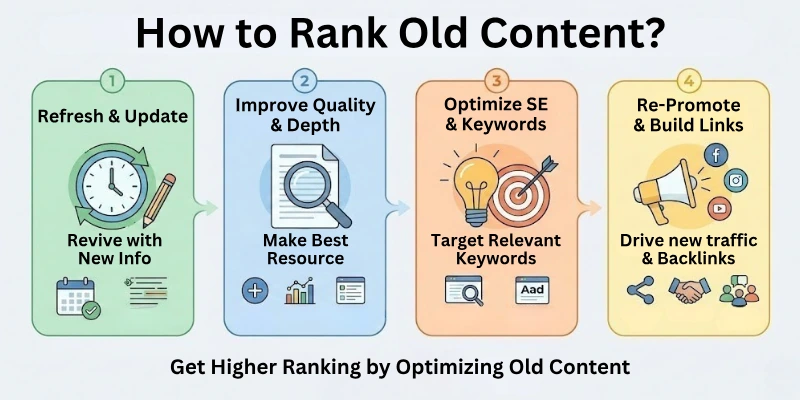
- Run A Content Audit
- Identify High-Potential Old Content
- Update And Refresh The Content
- Improve Keyword Optimization
- Match Content With Search Intent
- Expand And Improve Content Depth
- Optimize On-Page SEO Elements
- Improve Content Readability
- Add Internal Linking
- Fix Technical SEO Issues
- Add Multimedia Content
- Build New Backlinks
- Promote The Updated Content
- Monitor Performance And Results
Now, let’s cover all these steps in detail.
Step 1: Run a Content Audit
Before you start updating anything, the first step is to perform a content audit.
A content audit helps you analyze the performance of your existing articles and identify which pages need improvement. It allows you to understand which posts are still performing well and which ones are losing traffic.
During the audit, look for:
- Pages with declining traffic
- Posts ranking on page 2 or 3 of Google
- Articles with outdated information
- Content with low engagement
- Pages targeting outdated keywords
Tools like Google Search Console, Google Analytics, Ahrefs, or SEMrush can help you identify these pages.
Once you know which posts need improvement, you can start optimizing them.
Step 2: Identify High-Potential Old Content
After completing the content audit, the next step is to identify high-potential old content.
High-potential content refers to posts that already have some visibility in search results but are not ranking at the top yet. These pages are often easier to improve compared to creating new content from scratch.
When identifying high-potential content, focus on:
- Pages ranking between positions 5–20
- Posts that already receive impressions in Google Search Console
- Articles with strong backlinks
- Content covering evergreen topics
- Posts that previously generated high traffic
Updating these pages can quickly improve their rankings because they already have some authority and visibility.
Once you identify these posts, you can prioritize them for optimization and updates.
Step 3: Update And Refresh The Content
One of the most important steps in ranking older content is updating and refreshing the information.
Over time, facts, statistics, tools, and industry trends change. If your content contains outdated information, it may lose credibility and rankings.
To refresh your content effectively:
- Update outdated statistics and data
- Add new insights or recent examples
- Replace old tools or resources with current ones
- Remove irrelevant or outdated sections
- Update the publication or last-updated date if necessary
Regularly refreshing your content signals to search engines that the page is still relevant and valuable for users.
This helps improve both user experience and search visibility.
Step 4: Improve Keyword Optimization
Keyword optimization plays a major role in helping old content rank again.
When the article was originally published, the keyword strategy may have been different. Search trends change over time, so it is important to review and update your keyword usage.
While optimizing keywords, focus on:
- Ensuring the primary keyword appears naturally in the title and headings
- Adding relevant long-tail keywords
- Including semantically related keywords
- Optimizing keywords in the introduction and conclusion
- Avoiding keyword stuffing
You can use tools like Google Keyword Planner, Ahrefs, or SEMrush to discover new keyword opportunities.
Updating the keyword strategy can significantly increase the chances of your old content ranking higher.
Step 5: Match Content With Search Intent
Understanding search intent is essential when improving old content.
Search intent refers to the reason behind a user’s search query. If your content does not match what users are looking for, it will struggle to rank.
To align your content with search intent:
- Analyze the top-ranking pages for your target keyword
- Identify the type of content users expect (guide, list, tutorial, etc.)
- Add sections that answer common user questions
- Ensure the content provides clear and helpful solutions
For example, if users are searching for “how to rank old content,” they likely want practical steps and actionable tips.
Matching your content with user intent improves both engagement and rankings.
Step 6: Expand And Improve Content Depth
Sometimes older content loses rankings because it is too short or lacks depth compared to competitor articles. Expanding your content helps make it more comprehensive and valuable for readers.
You can improve content depth by:
- Adding new sections or subtopics
- Including detailed explanations
- Providing examples or case studies
- Answering related questions users may have
- Updating the article with additional research
Longer and more detailed content often performs better in search results because it covers the topic more thoroughly.
By expanding your content, you increase its chances of ranking higher.
Step 7: Optimize On-Page SEO Elements
On-page SEO optimization helps search engines better understand your content.
When updating older articles, it is important to review key on-page elements to ensure they follow current SEO best practices.
Focus on optimizing the following:
- Title tags and meta descriptions
- Headings such as H1, H2, and H3
- Image alt text
- URL structure
- Keyword placement within the content
Improving these elements helps search engines crawl and index your page more effectively. Better on-page SEO also increases the chances of higher rankings and better click-through rates.
Step 8: Improve Content Readability
Readability plays an important role in user experience and SEO performance. If your content is difficult to read, visitors may leave the page quickly, which can negatively impact your rankings.
To improve readability:
- Break large paragraphs into shorter ones
- Use clear headings and subheadings
- Add bullet points and numbered lists
- Use simple and easy-to-understand language
- Avoid overly complex sentences
Making your content easier to read helps users stay longer on the page and engage with the information. This improved user experience can positively influence search rankings.
Step 9: Add Internal Linking
Internal linking helps connect related pages on your website and improves navigation. When updating older content, look for opportunities to add links to other relevant articles or pages on your website.
Effective internal linking can include:
- Linking to related blog posts
- Connecting to important cornerstone content
- Adding links to product or service pages
- Updating older posts with links to newer articles
Internal links help search engines understand the structure of your website and distribute authority across pages. This can improve the rankings of both old and new content.
Step 10: Fix Technical SEO Issues
Technical SEO problems can prevent your content from ranking properly. While updating older articles, it is important to identify and fix any technical issues that may affect performance.
Common technical problems include:
- Broken internal or external links
- Slow page loading speed
- Mobile usability issues
- Duplicate content problems
- Incorrect redirects
Fixing these issues improves the overall performance of your website and ensures that search engines can crawl your content efficiently.
A technically optimized page has a much better chance of ranking well.
Step 11: Add Multimedia Content
Adding multimedia elements can make your content more engaging and informative. Search engines prefer content that provides a rich user experience, and multimedia plays a big role in achieving that.
You can enhance your content by including:
- Relevant images
- Infographics
- Videos
- Charts or graphs
- Screenshots and examples
Multimedia helps explain complex topics more clearly and keeps readers engaged for longer periods. Higher engagement can lead to better SEO performance and improved rankings.
Step 12: Build New Backlinks
Backlinks remain one of the strongest ranking factors in SEO. If your old content lacks quality backlinks, building new ones can significantly improve its authority and visibility.
You can build backlinks by:
- Guest posting on relevant websites
- Reaching out for link placements
- Sharing your content with industry communities
- Participating in collaborations or partnerships
High-quality backlinks signal to search engines that your content is trustworthy and valuable. This can greatly improve the chances of ranking your old content higher.
Step 13: Promote The Updated Content
After updating your content, promotion is essential to help it gain visibility again. Many website owners update content but forget to promote it, which limits its potential impact.
You can promote updated content by:
- Sharing it on social media platforms
- Sending it to your email subscribers
- Posting it in relevant online communities
- Republishing excerpts on content platforms
Promotion helps drive new traffic and signals to search engines that the content is active and valuable. This can help your updated content regain momentum in search results.
Step 14: Monitor Performance And Results
The final step is to monitor the performance of your updated content. SEO improvements take time, so tracking the results helps you understand whether your updates are working.
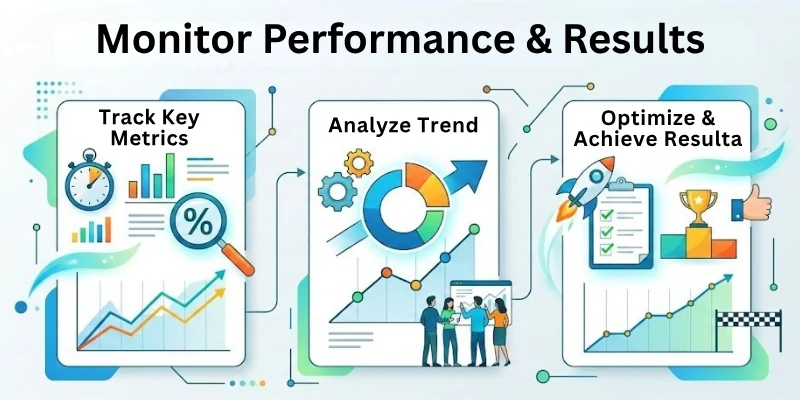
Key metrics to monitor include:
- Organic traffic growth
- Keyword ranking improvements
- Click-through rate (CTR)
- User engagement metrics
- Conversion rates
Tools like Google Analytics and Google Search Console can help track these metrics.
By regularly monitoring performance, you can continue refining your strategy and maximize the ranking potential of your updated content.
Why Is it Important to Update and Optimize Old Content?
Updating and optimizing old content is crucial for several reasons:
- Keeps Content Relevant: Updating old articles ensures that the information stays accurate and useful for readers.
- Improves Search Rankings: Search engines prefer fresh and updated content, which can help your pages rank higher.
- Builds Trust With Readers: Updated content shows that your website provides reliable and current information.
- Increases Website Traffic: Optimized old content can start ranking again and bring more visitors to your site.
- Improves User Experience: Updated content is easier to read, better organized, and more helpful for users.
- Saves Time and Effort: Improving existing content is often faster and easier than creating completely new articles.
Conclusion
So guys, it’s time to say goodbye!
In this guide, we have covered how to rank old content using 14 of the best ways. By following these steps, you can update your old articles and make your “oldie goldie” content fresh and valuable again.
When you regularly update your content, it sends a positive signal to search engines that your website provides updated and useful information for users. As a result, search engines may reward your content with better rankings and more visibility.
My personal recommendation is that you should audit your content regularly and update important articles every few months. Even small improvements like adding new information, improving keywords, or fixing technical issues can make a big difference in rankings.
Instead of letting your old content lose traffic, take the time to refresh it and turn it into a strong SEO asset for your website. Now, let’s take a look at some frequently asked questions about ranking old content.
FAQs
Here are some of the most commonly asked questions related to how to update old website content:
Updating old blog posts helps them stay relevant and accurate. It improves your chances of ranking higher on search engines. Fresh content also gives a better experience to readers, which can lead to more traffic and engagement.
You should update important content at least every 6–12 months. If the topic changes faster (like technology or SEO), update more often. Regular updates help keep your content useful and competitive.
Yes, updating content can boost search rankings. Search engines prefer content that is accurate, up to date, and useful for users. When you improve your old posts, search engines may show them higher in results.
You should update outdated facts, add recent examples, and improve the writing. You can also include new keywords and check internal links. Improving readability and adding images can also make a big difference.
It’s best to keep the same URL whenever possible. Changing the URL can cause loss of search traffic and links. If you must change it, use a 301 redirect to send visitors from the old URL to the new one.
Use tools like Google Search Console or Google Analytics to find posts with declining traffic. Look for pages that rank on page 2 or 3 of search results. These are good candidates for updates that can improve ranking.
Yes, adding relevant images can improve engagement. Images make content easier to read and help users stay longer on the page. This can send positive signals to search engines and improve rankings.
Yes, updating keywords is important. Search trends change over time, so old keywords might not bring traffic anymore. Adding new relevant keywords can help your content reach more users.
Yes, even evergreen topics can become outdated in examples, tools, or data. Updating these parts keeps the content useful and accurate. Evergreen topics with updated details can continue to attract traffic for years.
Yes, updating old content often brings more traffic. Fresh and improved content can rank for new keywords. When your content becomes more useful and relevant, it attracts more clicks from search results.




- Be Respectful
- Stay Relevant
- Stay Positive
- True Feedback
- Encourage Discussion
- Avoid Spamming
- No Fake News
- Don't Copy-Paste
- No Personal Attacks
- Be Respectful
- Stay Relevant
- Stay Positive
- True Feedback
- Encourage Discussion
- Avoid Spamming
- No Fake News
- Don't Copy-Paste
- No Personal Attacks
