Main Types of Domain Names: Explained!
Published: 4 Oct 2025
Choosing the right domain name type can shape how your website performs online. Some domains boost SEO naturally, while others are better for branding.
In this guide, we’ll explore the four main types of domain names: Exact Match Domain (EMD), Partial Match Domain (PMD), Non-Match Domain (NMD), and Macro Domain, along with their pros, cons, and examples to help you make the right choice.
So, without wasting any time, let’s dive in!
Domain Types
Domain types refer to the various classifications or categories of website addresses on the internet. If you know about these domain types, you can choose the one that best fits your needs.

There are four main types of domains to think about:
- Exact Match Domain (EMD)
- Partial Match Domain (PMD)
- No Match Domain (NMD)
- Macro Niche Domain
Let’s start learning each domain type in detail.
1. Exact Match Domain (EMD)
EMD means “Exact Match Domain”. It includes the exact keyword or phrase that people search on Google. For example, if your niche is “Mechanical Keyboard Types”, then your domain could be:
- www.mechanicalkeyboardtypes.com
Here, your domain exactly matches the search term.
More EMD Examples
- Niche ⇒ Advantages of Internet (Domain ⇒ www.advantagesofinternet.com)
- Niche ⇒ Online Keyboard Checker (Domain ⇒ www.onlinekeyboardchecker.com)
Each one exactly matches the keyword. That’s why it’s called an “exact match domain”.
How EMD Works
When someone searches for your keyword, your domain already includes that same term. That makes users feel more confident about your site—they instantly know what it’s about.
However, Google no longer gives extra ranking power just because of a keyword-based domain. So while it looks SEO-friendly, it doesn’t guarantee better ranking.
Pros of EMD
Some major advantages of using an EMD domain name are:
- Users feel more confident; the domain clearly shows what the site is about.
- SEO-friendly (but no extra ranking advantage anymore).
- Easy to remember for specific niches.
Cons of EMD
Some disadvantages of using EMD domain names are:
- Not expandable — you can’t easily cover other topics later.
- Often long or hard to read.
- Sometimes not available because many are already registered.
When to Use EMD
Use an EMD only if your site is focused on a single topic or niche and you don’t plan to expand. For example, a site about “online keyboard checker” can use www.onlinekeyboardchecker.com — it’s simple and direct.
2. PMD (Partial Match Domain)
PMD stands for “Partial Match Domain”. It includes part of your main keyword plus another word that makes it unique or brandable.
Example niche: “Mechanical Keyboard Types”. You could choose:
- www.keyboardtypes.com
- www.mechanicalkeyboard.com
Both domains cover part of the keyword, but not the full phrase.
More PMD Examples
Niche ⇒ Online Keyboard Checker
- Domain ⇒ www.keyboardchecker.com
- Domain ⇒ www.onlinekeyboards.com
These domains sound cleaner and shorter but still keep a part of your main keyword.
How PMD Works
PMDs are great because they look professional, include relevant keywords, and are still flexible enough for future growth. They tell users what your website is about without sounding spammy.
Pros of PMD
Here are some of the major advantages of using PM domains:
- SEO-friendly and keyword-relevant.
- Easier to brand than EMD.
- Expandable — you can cover related topics later.
- Usually shorter and easier to remember.
- More chances to find them available for registration.
Cons of PMD
The major disadvantages of using PM domain names are:
- Doesn’t carry the full keyword — slightly less direct.
- May require stronger content to rank well.
When to Use PMD
Use PMD if you want a balance between keyword value and brand growth. For example, keyboardchecker.com is short, relevant, and easy to grow.
3. NMD (No Match Domain)
NMD means “No Match Domain”. It doesn’t include your keyword at all. Instead, it’s a brand name that you build from scratch.
Example niche ⇒ Mechanical Keyboard Types
- Domain ⇒ www.keydevices.com
This domain doesn’t include “keyboard” or “types”, yet it feels related to the topic. It’s unique and can grow into a brand.
More NMD Examples
Niche ⇒ Best Search Engine
- Domain ⇒ www.google.com
- Domain ⇒ www.yahoo.com
These domains have no keywords—they’re pure brands. People trust them because of their reputation, not their keywords.
How NMD Works
NMDs are ideal if you plan to build a long-term brand or cover multiple niches. The domain name doesn’t limit you to one topic. It’s more about brand recognition than SEO.
Pros of NMD
Here are some of the major advantages of using NMD:
- Great for building a brand.
- Short and memorable.
- Easy to expand into other niches.
- Perfect for long-term businesses.
Cons of NMD
The disadvantages of NMD are:
- Users may not immediately understand what your site is about.
- Not SEO-friendly — doesn’t include any keywords.
- It takes time to build brand recognition.
When to Use NMD
Use NMD if you’re planning to launch a brand or company. If your goal is to grow like “Google” or “Yahoo”, this is the best type for you. And these domain names are easily available too.
4. Macro Domain
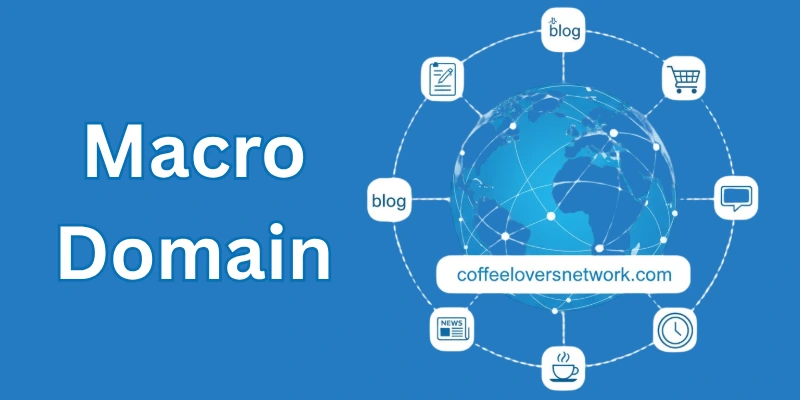
A macro domain covers a broad topic area instead of one niche. It’s short, clean, and powerful. These domains are usually single-word names that represent an entire category.
Macro Domain Examples
Niche ⇒ Mechanical Keyboard Types
- Domain ⇒ www.keyboard.com
Niche ⇒ Advantages of Internet
- Domain ⇒ www.internet.com
These are high-level, category-based domains. They’re rare, premium, and very valuable.
How Macro Domains Work
Macro domains are powerful because they represent an entire industry. They’re perfect for authority websites, large companies, or future expansions. Owning such a domain builds instant trust. But most macro domains are already owned or very expensive to buy.
Pros of Macro Domain
Advantages of macro domain name types are:
- Highly SEO-friendly.
- Users feel confident and trust the domain.
- Expandable to multiple subtopics.
- Short, clean, and professional.
Cons of Macro Domain
Disadvantages of using macro domain names are:
- Very expensive and often unavailable.
- Difficult for beginners to buy.
- Competitive — used mostly by big brands.
When to Use Macro Domain
Use a macro domain if you want to build a strong authority site or have a big project plan. For example, keyboard.com could host blogs, reviews, stores, and tools—all under one main brand.
Comparison: EMD vs PMD vs NMD vs Macro Domain
Here is the clear-cut difference between all types of domain names:
| Feature | EMD | PMD | NMD | Macro Domain |
| Keyword Presence | Exact match | Partial match | None | Broad category |
| SEO Strength | High (short-term) | Moderate to high | Low (brand-based) | Moderate |
| Branding | Weak | Balanced | Strong | Moderate |
| Scalability | Limited | Medium | High | Very High |
| Trust Level | Low (generic) | Medium | High | High |
| Ideal For | Micro-niche sites | Blogs / Affiliate sites | Brands / Startups | Authority platforms |
Priority Order for Domain Types
Here’s how these domain types rank in priority if your niche is Online Keyboard Checker:
- Macro domains are rare but ideal.
- PMD domains are practical and balanced.
- EMD domains are simple but limited.
- NMD domains are brand-focused but not SEO-based.
| Priority | Type | Example Domains |
| 1️⃣ | Macro Domain | keyboard.com or checker.com |
| 2️⃣ | PMD Domain | keyboardchecker.com or keyboardtesting.com |
| 3️⃣ | EMD Domain | onlinekeyboardchecker.com |
| 4️⃣ | NMD Domain | yagoo.com, identify.com, adingoly.com |
Our Personal Recommendation
For beginners, I recommend starting with a Partial Match Domain (PMD). It’s a good choice because it’s SEO-friendly, short, and easy to remember. PMDs can help users feel confident and give your website a clear focus. What makes them great is that they are flexible, so you can expand your site over time if you want to cover more topics.
While Exact Match Domains (EMD) can also work, they are often longer and less flexible. No Match Domains (NMD) are mainly for building strong brands but might be harder for users to understand at first.
For broader topics, a Macro Niche Domain is ideal, though they are often harder to find. As a beginner, a PMD gives you the perfect balance of simplicity and room to grow.
FAQs
Here are some of the most frequently asked questions about the domain name types.
An EMD has your full keyword, like “onlinekeyboardchecker.com”. A PMD has only part of the keyword, like “keyboardchecker.com”. EMDs are more focused on one topic. PMDs are easier to expand if your website grows. Both can be SEO-friendly, but PMDs look more natural.
You can, but it might limit you. EMDs work best when your site stays in one niche. If your business grows into new areas, the name may not fit. In that case, a PMD or macro domain is better for flexibility. Always think long-term before choosing an EMD.
Not really, but it won’t help much with SEO either. NMDs don’t have keywords, so search engines can’t tell your topic easily. You’ll need stronger content and backlinks to rank well. It’s still a good choice if you want to build a unique brand. Focus on brand value, not just keywords.
Macro domains are short, broad, and very popular. Many are already owned by big companies.
That’s why they’re rare and expensive. You can try using creative names or similar words. It’s hard, but not impossible to find one that works.
PMDs can help with SEO, but they don’t guarantee top ranking. Their success depends on your website’s overall SEO. They’re more flexible and natural than EMDs. Search engines now focus more on quality content than just keywords. So use PMD smartly with good SEO practices.
Try adding a short word or changing the order slightly. You can also mix words to create something new. If nothing works, go for a brand name (NMD). It’s fine if it’s unique and easy to remember. Tools like Instant Domain Search can help you find ideas.
Yes, they can work well for new brands. They don’t help with SEO at first, but they look professional. You just need good marketing and clear branding. Focus on content and user trust. Over time, people will remember your name.
You can change, but it’s risky. Switching domains can affect your SEO and traffic. It’s better to choose carefully from the start. If you ever change, use proper redirection. Plan before you buy — that’s always safer.
Try adding small changes like “the,” “my,” or “hub.” Use different word combinations. You can also check for other extensions like .net or .co. Domain name tools can show creative options. Don’t give up — there’s always a good alternative.
Not always, but short ones are easier to remember. Long names can look messy or be hard to type. Try to keep it simple and clean. Two or three words are perfect. Users should remember it after reading once.
- Be Respectful
- Stay Relevant
- Stay Positive
- True Feedback
- Encourage Discussion
- Avoid Spamming
- No Fake News
- Don't Copy-Paste
- No Personal Attacks
- Be Respectful
- Stay Relevant
- Stay Positive
- True Feedback
- Encourage Discussion
- Avoid Spamming
- No Fake News
- Don't Copy-Paste
- No Personal Attacks
