Myth or Fact: Does Keyword Density Matter for SEO?
Published: 12 Dec 2025
Keyword density is often thought of as an old SEO trick that doesn’t matter anymore. However, it can still help you check how well you’re using your main keyword. In this guide, I’ll explain everything you need to know about keyword density and how to optimize it.
So, without further ado, let’s dig in!!!
What is Keyword Density in SEO?
Keyword density is like a secret ingredient in a recipe. It’s an important part of the mix, but too much or too little can ruin the whole dish. The same goes for SEO, if you add too many keywords, your content will look spammy; if you add too few, it won’t be as effective.
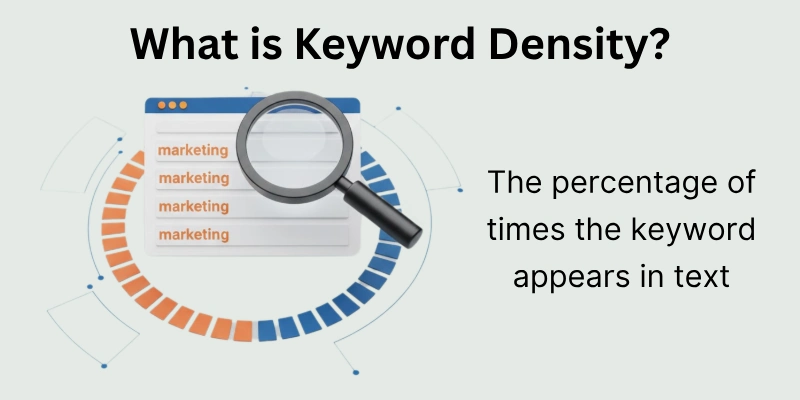
Basically, keyword density is the ratio of the number of times a word or phrase appears on a web page compared to the total number of words on that page. This helps search engines understand what the page is about and how relevant it is to a particular search query.
However, if you overuse keywords, your page may look like you’re trying to trick the search engines, and they might penalize you. So, the goal is to use keywords naturally without stuffing them into your content.
How to Calculate Keyword Density?
You can calculate keyword density on your own using a simple formula. Here it is:
Keyword density = (Number of times the keyword appears in the content) / (Total number of words in the content) x 100%
For example, let’s say you want to calculate the keyword density of the word “SEO” in the following content:
“Search engine optimization (SEO) is the process of improving the ranking of a website on search engines. This can be done by optimizing the website’s content, structure, and links.”
In this case, the keyword “SEO” appears once in the content, and there are a total of 22 words.
So, the keyword density would be:
Keyword density = (1) / (22) x 100% = 4.55%
As you can see, the keyword density for the word “SEO” in this content is 4.55%. This is a good example of how to calculate keyword density using the formula above.
How to Optimize Keyword Density for SEO
Optimizing keyword density helps your content rank better in search engines. It means using your keywords in a natural way throughout your content so both readers and search engines can understand it.
Here’s how to do it effectively:
- Conduct Keyword Research
- Use Synonyms and Variations
- Prioritize Quality Content
- Understand Keyword Intent
- Maintain Contextual Relevance
- Check and Adjust Content-Length
- Be Mindful of Target Keywords
- Stay Informed about Algorithm Changes
- Analyze Competitor Keyword Usage
- Follow Industry Standards
- Optimize Images with Alt Text
- Implement Internal Linking
- Focus on Natural Language Flow
- Utilize SEO-Friendly CMS Features
- Regularly Update and Refresh Content
- Avoid Keyword Stuffing
- Consider User Experience
- Monitor Analytics for Insights
Let’s learn about each tip.
1. Conduct Keyword Research
Start by finding keywords that are relevant to your topic and commonly searched by your audience. Researching keywords helps you create content that matches what people are looking for.
- Use tools like Google Keyword Planner, SEMrush, or Ahrefs.
- Look for keywords with a good balance of search volume and competition.
- Focus on terms your target audience actually uses.
2. Use Synonyms and Variations
Include words and phrases that mean the same or are closely related to your main keywords. This makes your content read naturally and avoids repetition.
- Use LSI (Latent Semantic Indexing) keywords.
- Include long-tail variations to target specific searches.
3. Prioritize Quality Content
High-quality content naturally improves keyword density. When your content is informative, engaging, and helpful, keywords fit naturally without forcing them.
- Write content that answers questions and solves problems.
- Use headings, bullet points, and clear paragraphs for better readability.
4. Understand Keyword Intent
Think about why users search for a keyword. Align your content to match their intent, whether it’s informational, transactional, or navigational.
- Target commercial keywords for product-related content.
- Use informational keywords for blogs and guides.
5. Maintain Contextual Relevance
Make sure your keywords fit logically in the content. Irrelevant usage can confuse readers and reduce SEO effectiveness.
- Place keywords where they naturally belong.
- Avoid forcing keywords into unrelated sentences
6. Check and Adjust Content-Length
Longer content allows for more keyword usage without overstuffing. Adjust your keyword frequency based on how long your article is.
- Aim for a balanced density of 1–2% for primary keywords.
- Spread keywords evenly across sections.
7. Be Mindful of Target Keywords
Focus on your main keywords and place them strategically in titles, headings, and the first paragraph.
- Include primary keywords in meta title and description.
- Use them naturally in subheadings and content body.
8. Stay Informed about Algorithm Changes
Search engines update their algorithms often. Staying updated helps you optimize keywords the right way.
- Follow Google Search Central blog for updates.
- Adjust keyword strategies according to new guidelines.
9. Analyze Competitor Keyword Usage
Look at how competitors use keywords in their content. It helps you understand which keywords are effective and which gaps you can fill.
- Check headings, meta tags, and content structure.
- Identify keywords your competitors rank for that you haven’t used.
10. Follow Industry Standards
Use language and keyword practices common in your industry. This makes your content easier to read and more authoritative.
- Avoid unusual terms unless your audience understands them.
- Stick to common phrases your audience searches for.
11. Optimize Images with Alt Text
Include descriptive keywords in image alt text. This improves SEO and accessibility.
- Describe the image clearly with relevant keywords.
- Avoid keyword stuffing in alt text.
12. Focus on Natural Language Flow
Your content should be easy to read. Keywords should fit naturally and not disrupt the flow.
- Read your content aloud to check flow.
- Adjust sentences if keywords feel forced.
13. Utilize SEO-Friendly CMS Features
Use features in your content management system (CMS) to support keyword optimization.
- Use plugins like Yoast SEO or Rank Math.
- Optimize meta titles, descriptions, and headings directly in the CMS.
14. Regularly Update and Refresh Content
Updating content keeps it relevant and allows you to improve keyword placement.
- Add new information or examples.
- Check if keywords are still relevant and adjust if needed.
15. Avoid Keyword Stuffing
Too many keywords harm both SEO and readability. Focus on natural placement instead.
- Keep keyword density moderate.
- Prioritize readability over repeating keywords.
16. Consider User Experience
Always put your readers first. A positive experience improves SEO because users stay longer and engage more.
- Use headings, short paragraphs, and visuals.
- Make content easy to navigate and mobile-friendly.
17. Monitor Analytics for Insights
Track your keyword performance using analytics tools. This helps you refine your strategy over time.
- Check which keywords bring traffic and conversions.
- Adjust content based on what works best.
Keyword Density in Modern SEO
Keyword density, once considered essential in SEO, is now widely recognized as a myth with no direct impact on search rankings. In the past, websites would overload their content with keywords, hoping to hit a specific density to improve their position in search results.
However, search engines have evolved and are now much better at understanding the context and meaning of content. There is no longer a clear link between keyword density and higher rankings. Instead, search engines prioritize high-quality, relevant content that naturally includes keywords.
In modern SEO, keyword density should be seen as a loose guideline rather than a rule. While it’s still important to use keywords, the focus should be on creating valuable content that meets the needs of your audience and aligns with their search intent.
How can you Check Keyword Density of your Content Quickly?
Checking the keyword density of your content can be done quickly and easily using various online tools or manually.

Here are two methods:
Method 1: Using Online Tools
Here is how:
- Choose an SEO tool: Numerous free online tools can analyze your content’s keyword density. Popular options include SEO Review Tools, WebFX, and SmallSEOTools.
- Enter your content or URL: Once you’ve selected a tool, either paste your content into the designated text box or enter the URL of the webpage you want to analyze.
- Analyze keyword density: Click the “Check” or “Analyze” button, and the tool will calculate the keyword density for your content or webpage.
- Review keyword usage: The tool will typically display a table showing the frequency of each keyword, along with its corresponding keyword density percentage.
Method 2: Manual Calculation
Here is how:
- Identify your target keyword: Determine the specific keyword for which you want to check the density.
- Count keyword occurrences: Read through your content and count the total number of times your target keyword appears.
- Calculate keyword density: Divide the number of keyword occurrences by the total word count of your content and multiply by 100 to express the result as a percentage.
Myths Surrounding Keyword Density
Several myths surrounding keyword density have persisted over time despite its diminishing significance in modern SEO practices. Here are some common myths and the truths behind them:
Myth 1: There is an ideal keyword density percentage that guarantees high search rankings.
Truth: Search engines no longer rely solely on keyword density to determine a website’s relevance. Instead, they focus on understanding the overall context and quality of the content.
Myth 2: Keyword stuffing, or cramming your content with targeted keywords, will improve search rankings.
Truth: Keyword stuffing is a black hat SEO technique that can lead to penalties from search engines. Aim for natural keyword usage that fits the context of your content.
Myth 3: Keyword density should be calculated for every keyword in your content.
Truth: Focus on using your primary keyword naturally throughout your content. Avoid obsessing over the density of secondary or tertiary keywords.
Myth 4: Keyword density is irrelevant for modern SEO.
Truth: While keyword density is not a direct ranking factor, it still plays a role in signaling relevance to search engines. Use targeted keywords strategically, but don’t sacrifice quality for quantity.
Myth 5: Keyword density should be consistent across all your content.
Truth: Keyword density should vary naturally depending on the topic and length of each piece of content. There is no one-size-fits-all approach.
Side Note: Remember that the most important thing for SEO is to write high-quality, helpful content for your audience. You should naturally use relevant keywords, but the most important thing is to make content that speaks to your audience and matches their search intent.
Conclusion
Alright, so to wrap up this chat about “What is Keyword Density in SEO?” Think of it like this: keyword density used to be the boss, but now it’s more like a friendly companion.
No need to stress about stuffing your content with keywords, that’s so yesterday! These days, it’s all about having top-notch content that your audience loves.
Say goodbye to the old-school keyword rules and focus on creating awesome content that people want to read. So, wave bye-bye to keyword density, it’s time for your content to shine without the old restrictions!
FAQs
Here are some of the most commonly asked questions related to the keyword density in seo:
There is no set number of keywords you should use in your content. Focus on making high-quality, useful content instead, and relevant keywords will show up naturally. Aim for a keyword density of around 0.5% to 2%, but don’t sacrifice quality for keyword count.
Keyword variants are words or phrases that are closely related to your target keyword. Including keyword variants in your content helps search engines understand the context of your content and match it to relevant search queries.
Keyword clustering is the process of grouping related keywords together to create a content strategy. This helps you identify the main topics relevant to your content and ensure you’re covering them comprehensively.
There is no ideal keyword density percentage. The best approach is to use keywords naturally throughout your content without stuffing them in. Aim for a keyword density of around 0.5% to 2%, but prioritize quality over quantity.
Keyword stuffing is the practice of cramming your content with keywords in an unnatural way. This can lead to penalties from search engines, as it negatively impacts user experience and signals spammy tactics.
Keyword density is a measure of how often a specific keyword appears in a piece of content, expressed as a percentage. Keyword frequency is simply the number of times a keyword appears in the content. While they are related concepts, they provide different insights into keyword usage.
No, keyword density does not guarantee higher rankings. Search engines focus more on the quality and relevance of your content. Using keywords naturally is more important than trying to hit a specific percentage.
You don’t need to obsess over keyword density, but it’s still a useful guideline. It helps ensure you’re using your main keywords enough without overstuffing. The key is to write content that flows naturally and adds value.
Yes, using the same keyword too often, known as keyword stuffing, can hurt your SEO. Search engines may see this as an attempt to manipulate rankings. It’s better to use keywords naturally and focus on the overall quality of your content.
If your keyword density is too low, search engines may not recognize the main focus of your content. However, this doesn’t mean you need to force keywords. Just make sure your content is relevant and uses keywords where they fit naturally.
Keyword density is more important for longer content, where keywords might naturally appear more often. For shorter content, don’t worry about hitting a specific percentage. Instead, focus on writing clear and useful information for your readers.